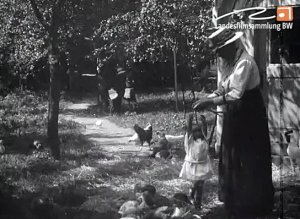
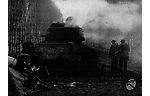
Family-scenes of the Hähnle family, who lived in Giengen an der Brenz during World War I. In the garden, a soldier demonstrates how to wear a gas mask. Lina (founder of the Alliance for protection of...
A documentary, divided into chapters, about the life of the inmates of the asylum on Leros. The documentary aligns with the point of view of anti-psychiatry that considers the mentally ill as victims ...
Report on the total devastation and destruction of Nieuwport. Although former streetnames are being mentioned, nothing seems to be recognizable any longer since the complete city is destroyed during t...
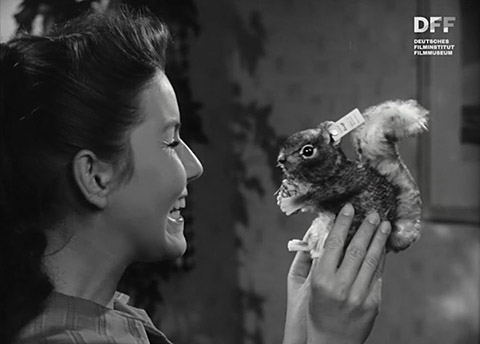
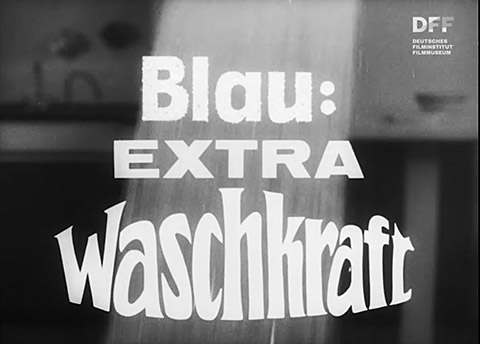
Spot Nr. 1 (00:37): Adler (Nr. 1 musikalisch): A man at supper in a room asks, „Are you musical? Then why don't you sing along?“ He sings, with accordion accompaniment from off-camera, „Adler ch...
Spot Nr. 1 (00:34): POLAR Rum 68/1: A person dressed in fur jacket in snow flurry. „Winter time, polar time, grog time - time for Polar.“ The person is serving grog with Polar Rum. A elegantly dre...
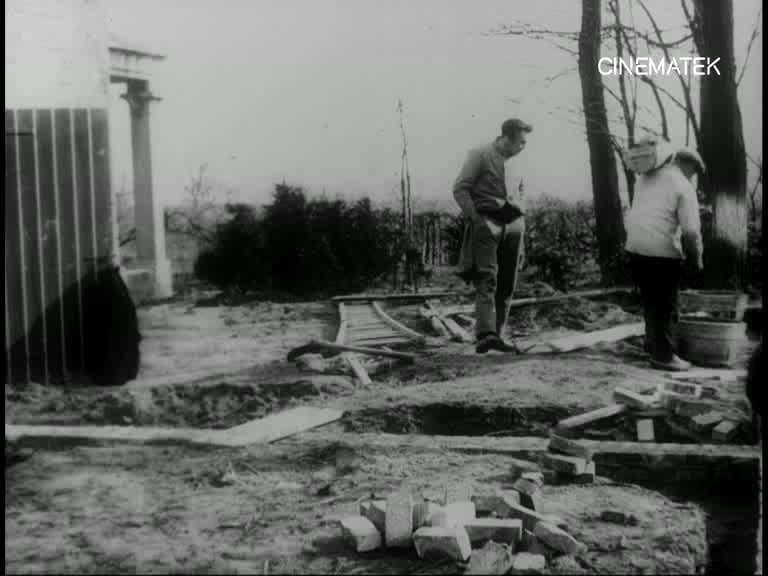
Reportage on the making of the sculptures for the Ysertoren by sculptor Karel Aubroeck.
Reel 1: In the introduction, the film separates the old and the new Bern. The old part: Münster cathedral, fountains, streets in the old town. The new part: Gymnasium Kirchenfeld, Hotel Savoy. 2nd p...
Dinos Vristhenis (Stelios Tatasopoulos), a poor student in the University of Athens, has dropped out of his studies because of dire financial difficulties and is job hunting. He is employed as an acto...
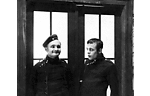
Dva vojáci před oknem.
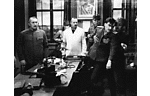
Pohled do pracovny, kde kolem stolu stojí plukovník rakouské armády (Jaroslav Marvan), MUDr. Šrámek (František Smolík), za ním dva členové vojenské stráže (třetí zprava Frank Rose-Rů...
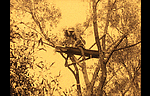
Výjev ze sekvence bitvy u Zborova. Celek vojáka, který pozoruje průběh bitvy ze stromu.
diapositiva a colori
W.R.. „Historische Filme.“ Bild & Film. Zeitschrift für Lichtbilderei und Kinematographie III, 3/4 (1913/1914): 86. Der Rezensent führt den Film als Beispiel dafür an, dass die Filmindustrie mi...
O. Verf.. „Krieg und Kino.“ Der Kinematograph 397 (1914): 3-4. Bericht, wie bislang der Film in Kriegen eingesetzt worden sei. Ratschläge an Kinobesitzer, wie sie sich zu verhalten hätten. Mutma...
Rundschau, Bild & Film. Zeitschrift für Lichtbilderei und Kinematographie, IV,1, (1914/1915), S. 34-41. Berichte über Firmen, die mit Pathé Frères in Verbindung stünden und deshalb boykottiert we...
Hellwig, Albert. "Zur Reform der Filmzensur." Bild & Film. Zeitschrift für Lichtbilderei und Kinematographie III, 3/4 (1913/1914): 56-58. Gerichtsassessor A.H. erklärt das mögliche Zustandekommen e...
Häfker, Hermann. "Sind die 'kleinen' Kinotheater der Reform schädlich?" Bild & Film. Zeitschrift für Lichtbilderei und Kinematographie III, 3/4 (1913/1914): 58-60. Häfker geht davon aus, dass die ...
Rennert, Malwine. "Kleopatra, Herrin des Nils; Die letzten Tage von Byzanz." Bild & Film. Zeitschrift für Lichtbilderei und Kinematographie III, 3/4 (1913/1914): 65-68. Rennert lobt „Kleopatra“ f...