Manolis, an officer of the Greek Army (Alekos Alexandrakis) arrives on Crete, after its fall to the Germans. In collaboration with partisans and allied English saboteurs, under the leadership of capta...
The film’s main theme is the temporary affair of a professor of English (Kostas Messaris) with the daughter of a wealthy family, whom he tutors in order for her to marry an English businessman. The ...
In postwar Thessaloniki, Dimitris, a young man, "arrests" Spyros, a kid who stole a wallet and tells him his story, namely the story of the 160 children that made up "The Barefoot Battalion" and strug...
It is an articulated film comprised of three free-standing stories with a common theme: the attitude of the Greeks under the yoke of a foreign power. The Clock, the first story, is a comedy set on the...
Postman Antonis (Orestis Makris) with Froso, his grumpy wife (Nelli Marselou) and his daughter Toula (Nelly Mavropoulou) live in a house with a yard in the district of Plaka, Athens. The same yard sha...
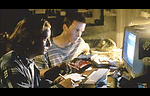
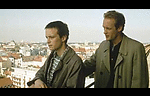
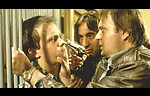
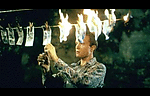
Fabian Busch, August Diehl (v.l.n.r.)
August Diehl (links)
August Diehl, Dieter Landuris, Jan Gregor Kremp (v.l.n.r.)
August Diehl
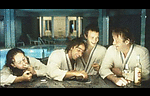
Fabian Busch, Dieter Landuris, August Diehl, Jan Gregor Kremp (v.l.n.r.)
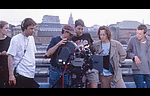
Hans-Christian Schmid, Klaus Eichhammer (Kamera), Kai Rostasy (Kameraassistent), Fabian Busch, August Diehl (v.l.n.r.) bei den Dreharbeiten
Szene mit August Diehl (rechts)
Filmplakat
Československý film. – Vol. 1, No. 1 (16.12.1918)-Vol. 3, No. 12 (18.06.1921). -- V Praze : Syndikát československých půjčoven filmových : Československý film, sdružení českých výrobe...
Letter from Berlinale director Dr. Alfred Bauer to Artur Brauner, 23 May 1957, regarding the subtiteling of "Die Letzten werden die Ersten sein" for the world premiere.