The film shows the development of paper and how its success travelled throughout the world until it finally reached Britain. The versatility of paper was demonstrated as the various uses for the comm...
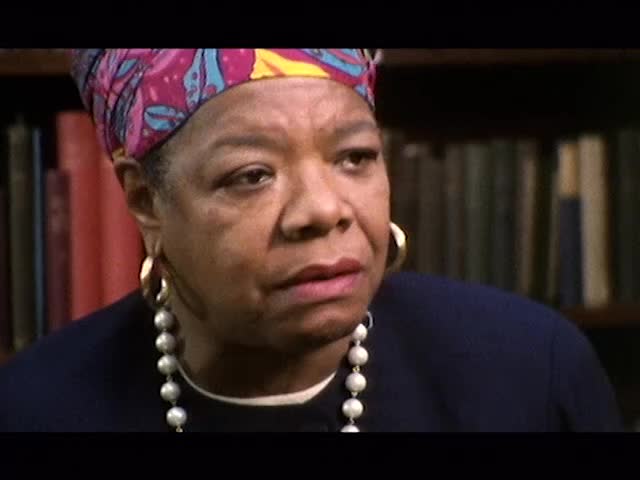
Dr Maya Angelou, the African American poet and writer, discovered Robert Burns when she was eight. She was poor, Black and mute living in Stamps, Arkansas. In this film she explores the strong paralle...
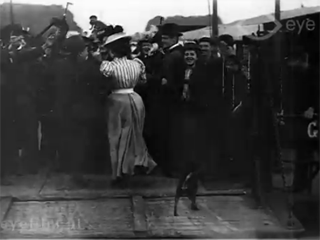
The main characters of the revue, Roland and Camilla, rush to catch the ferry across the IJ to reach the Tollhouse. When this film was screened, the song 'Kom Kamilleke, kom' was sung.
This film served to introduce the music-hall act of Louisette and Chrétienni and was an integral part of their number.
In der Reihe WAS TUT SICH – IM DEUTSCHEN FILM? präsentiert das Kino des Deutschen Filmmuseums einmal im Monat ein aktuelles Werk. Am 2. November 2016 war Regisseur Klaus Lemke im Rahmen seiner Cart...
Step by step, Anders Sveen and Peder Settem, of Surnadal in the district of Nordmøre, demonstrate how tar was distilled from pine wood in the old days. The elaborate and time-consuming process was te...
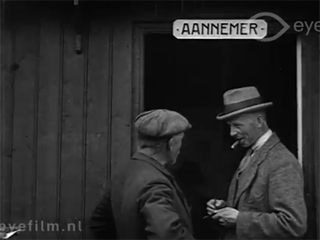
Propaganda film for the Municipal Labor Exchange in Amsterdam At the beginning of the 20th century, countless private employment agencies were active in Amsterdam, each with its own specialization. ...
The area, a timber-yard, has been completely flattened by the explosion. The captions stress that this was not the result of a bombardment or air raid.
Newsreel item on an explosion in the Rue To...
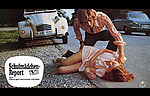
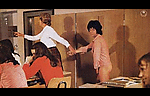
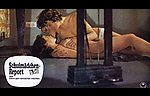
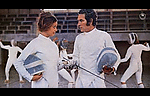
Szene aus "Schulmädchen-Report 6. Teil: Was Eltern gern vertuschen möchten"
Szene mit Rinaldo Talamonti
Szene aus "Schulmädchen-Report 6. Teil: Was Eltern gern vertuschen möchten"
Hannelore Elsner, Christof Wackernagel , Gila von Weitershausen (v.l.n.r.)
Christof Wackernagel
Christof Wackernagel, Gila von Weitershausen
Hannelore Elsner, Christof Wackernagel
Several changes to the film had been made and the "Deutsche Vereins-Film A.G." applied again for examina- tion of "Cyankali" at the censorship office in Berlin (Film-Prüfstelle Berlin, examination no...
Two scenes had to be cut out:1) pictures in the last act, where a drawing is shown that resembles the "Hakenkreuz" (swastika).2) "running scene" in a night club between Jack and Carter had to be short...
Following parts had to be removed:1) 5. act, title 47, "Halte es für ein großes Lob usw." (I regard this as a big laud and so on)2) 5. act, title number 48 up to the words "und was ist ihnen hier an...
Film distributing company applies for a new censoring of the film "Tělo a ďábel". The film was qualified for public screening - ban for young people.Date of issue of the first (previous) censorshi...
The production company "Nivo-Film Comp, Berlin" applied against the partial ban (some scenes were censored) of the film "Die Ehren-Gedenkfeier für die toten Helden" at the censorship headquarter in B...
Film company applies for a new censoring of the film “Zlaté opojení”. The film was qualified for public screening – ban for young people. Date of issue of the first (previous) censor...
Film distributing company applies for a new censoring of the film "Na nejvyšší vrchol světa (Mount Everest)". The film was qualified for public screening - full permission, cultural-educative pred...
The "Deutsche Vereins-Film A.G." applied for permission to public screening of "Cyankali" at the censorship office in Berlin (Filmprüfstelle Berlin). On 2nd April 1930 the film was permitted with age...