The film shows the development of paper and how its success travelled throughout the world until it finally reached Britain. The versatility of paper was demonstrated as the various uses for the comm...
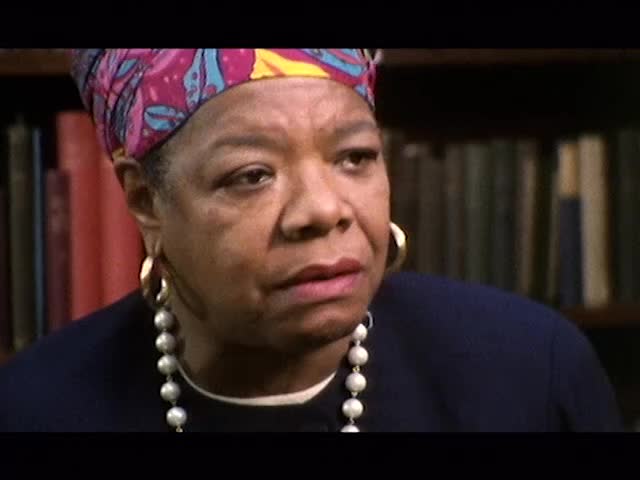
Dr Maya Angelou, the African American poet and writer, discovered Robert Burns when she was eight. She was poor, Black and mute living in Stamps, Arkansas. In this film she explores the strong paralle...
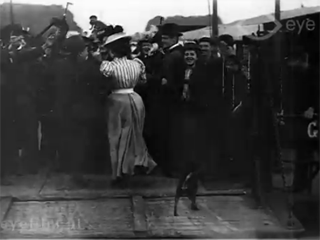
The main characters of the revue, Roland and Camilla, rush to catch the ferry across the IJ to reach the Tollhouse. When this film was screened, the song 'Kom Kamilleke, kom' was sung.
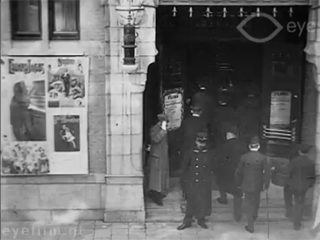
This film served to introduce the music-hall act of Louisette and Chrétienni and was an integral part of their number.
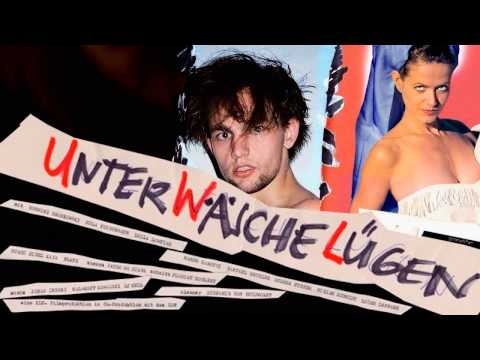
In der Reihe WAS TUT SICH – IM DEUTSCHEN FILM? präsentiert das Kino des Deutschen Filmmuseums einmal im Monat ein aktuelles Werk. Am 2. November 2016 war Regisseur Klaus Lemke im Rahmen seiner Cart...
Step by step, Anders Sveen and Peder Settem, of Surnadal in the district of Nordmøre, demonstrate how tar was distilled from pine wood in the old days. The elaborate and time-consuming process was te...
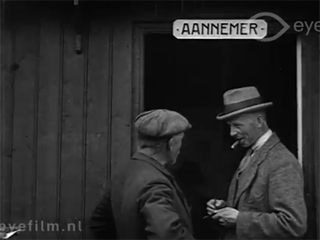
Propaganda film for the Municipal Labor Exchange in Amsterdam At the beginning of the 20th century, countless private employment agencies were active in Amsterdam, each with its own specialization. ...
The area, a timber-yard, has been completely flattened by the explosion. The captions stress that this was not the result of a bombardment or air raid.
Newsreel item on an explosion in the Rue To...
"Was tun, wenn's brennt?" (2001)
"Was Du nicht siehst" (2009)
"Was tun, wenn's brennt?" (2001)
"Weißt was geil wär...?!" (2007)
"Was Du nicht siehst" (2009)
"Was die Schwalbe sang" (1956)
The film "Die Carmen von St. Pauli" was permitted by the censorship office in Berlin with age restriction (only for adults 18 years of age or older) and cuts (four scenes were banned).
Ministry of Interior issued for the distributing company Leofilm, Praha registration card for the film "Kristus". The film was qualified for public screening - full permission, cultural-educative pred...
The provincial government of Prussia applied for revocation of permission of the film "Der Roman einer Krankenschwester" at the censorship headquarter in Berlin. The application was rejected but three...
The film "Reiter der Nacht" was permitted by the censorship office in Berlin with age restriction (only for adults 18 years of age or older) and cuts (three scenes were banned).
FILMEN is the most important Danish film industry magazine from the early silent film period. The journal was published in the period 1912-1919 (with 24 issues per year).
2 scenes had to be cut out:1) Where Maria sits on the bed only wearing a shirt (title number 11, 1 act)2) When Maria takes a bow and her breast line (part of the breast) is visible (titles 61-63, act ...