The film takes a typical case, "John Brown", a clerk aged 30, single with one dependent (a sister ?) living in his own house in Catford in the suburbs of London. On the outbreak of war he attested. Af...
The banks of the Neuville Canal, near Rheims, are lined with damaged houses. The glass factory at Neuvillette is reduced to rubble and a few walls. Old German dugouts and fortifications cover the area...
Both the fête and the film stress the fact that the Duchess was American. The children present her with a bouquet in their school playground. She addresses them while a child waves a US flag behind h...
I. 'THE GERMAN ATHENAEUM LTD. are invoking the aid of the English Law to forcibly eject the Services Club, and as a protest against such action by a Company so constituted any attempt at entering thes...
I. 'SOLDIERS V NURSES: The soldier inmates of the Brondesbury Hospital challenge the Nurses to a cricket match, driving down to Wembley on the coaches for the match, which the soldiers won'. The game ...
On a ship bound for Genoa there is a boy in rags is a small Padua, who was sold by his parents to a company of acrobats and had been forced, in order to feed themselves, to do all the work in the circ...
The Public Health Department was created to put reception and counseling facilities into place--with the American Committee's help-- for parents in difficulty. An American Committee nurse, assisted b...
This is the romanticized story of Louise de Bettignies, who was a spy and heroin of the First World War. In October 1914, in Roubaix, Geneviève de Vandeville delivers mail in secret. Brilliant and ef...
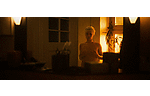
Kristin Suckow in "Was bleibt" (2018)
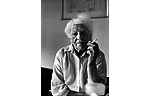
Gertrud Quillus in an old people's home (1989)
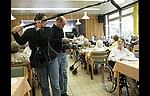
Jens Ludwig and Andreas Frowein (front) on the set
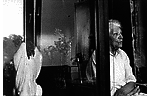
Director Heiko Arendt, Gertrud Quillus
Andreas Frowein and Britta Kastern on the set
Britta Kastern and Andreas Frowein (on the left) on the set
Gertrud Quillus in an old people's home (1989)
Andreas Frowein and Britta Kastern (on the left) on the set
The film "Was ich von der Gnädigen lernte" was permitted by the censorship office in Berlin with age restriction (only for adults 18 years of age or older) and cuts (two scenes were prohibited).