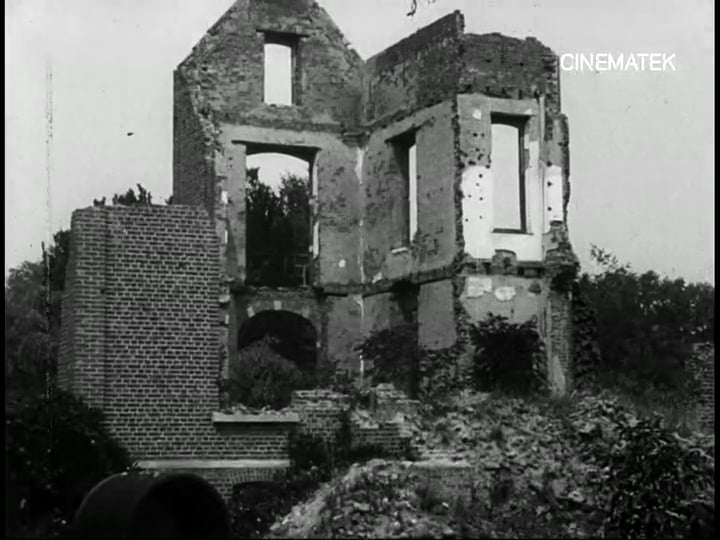
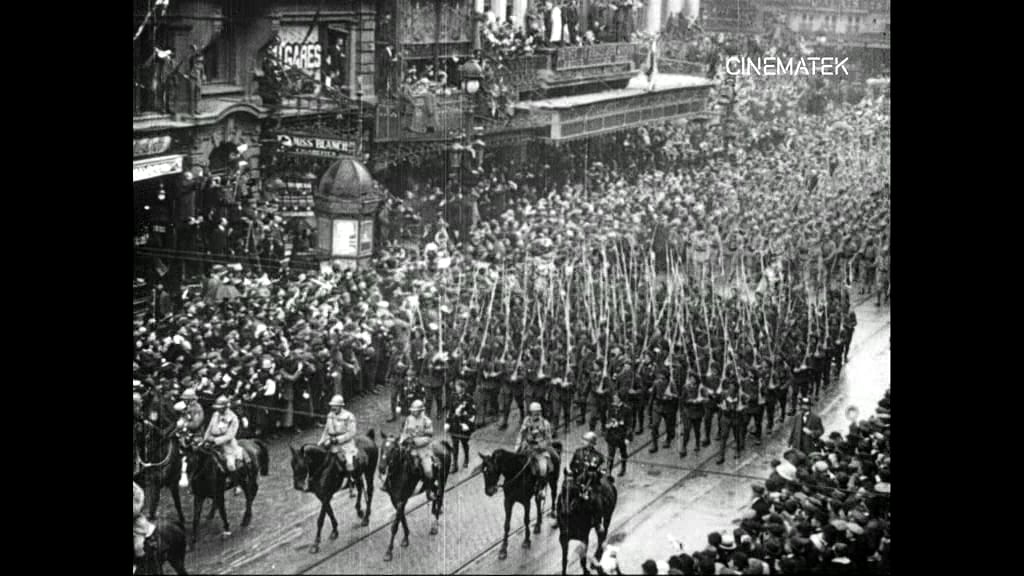
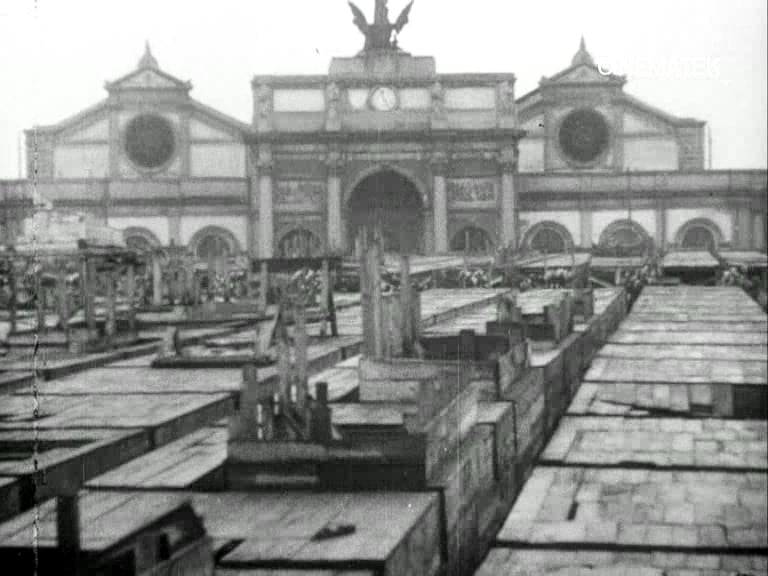
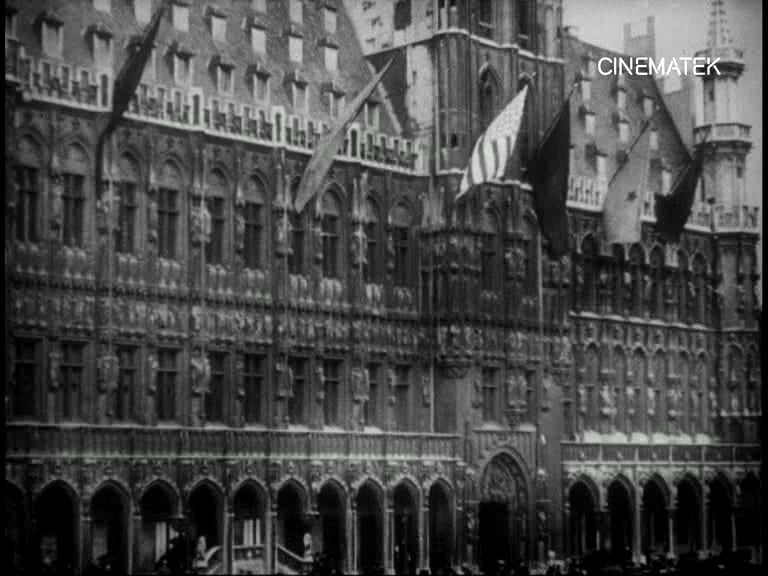
War-time report, probably released in August 1919.
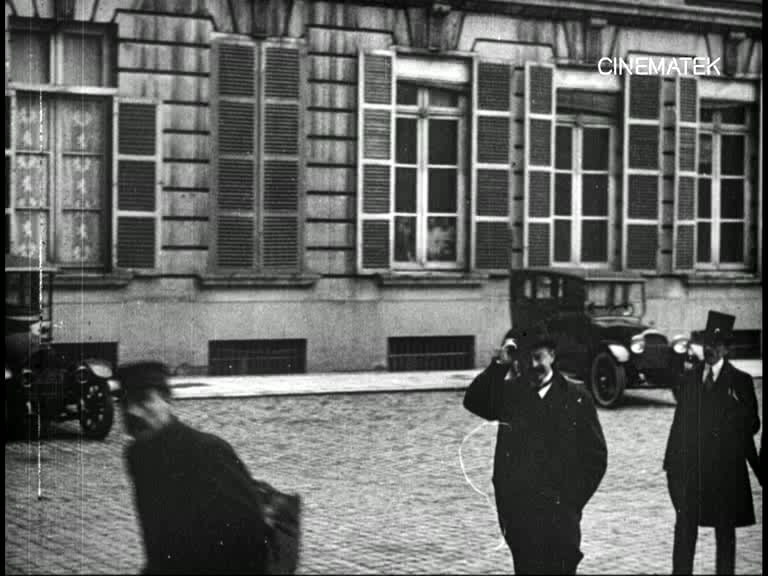
Report on Poincaré's presidential visit to Belgium after the First World War.
War-time report, broadcasted in 1920.
War-time report, released in August 1919.
War-time report, released by the cinematographic service of the Belgian army in August 1920. Commemorations of the Great War dominated the news reports at that time.
Promotional documentary about the Algemene Spaar- en Lijfrentekas. A Belgian public institution, that focussed on the social conditions of the labourers and their families, in an increasingly developi...
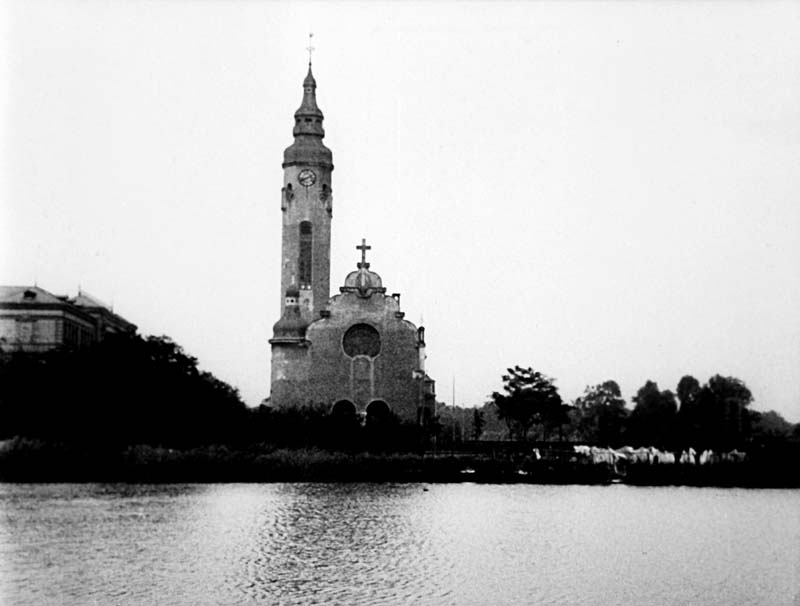
The dreary looking landscape devastated by surface mining creates a contrast to the overall views of the town of Duchcov and romantic views of the Barbora Lake or St. Barbara´s Church. By the cemeter...
An introductory shot of the Rieger Square in the town of Mšeno is followed by another shot showing a man walking through a rocky pass and carrying a piece of log on his shoulder. From the top of the ...
German movie poster of "Egal was kommt" (2018)
"Egal was kommt" (2018)
Niklas Bruhn in "So was von da" (2017)
German movie poster of "So was von da" (2017)
Following parts had to be removed:1) preparations of the excutioner with the cord2) scene, where the hung man is shownThe film was interdicted to young people.
The production company "National-Film A.G., Berlin" applied against the ban of the film "Glanz und Elend des Apachen" at the censorship headquarter in Berlin. The application was rejected.
The production company "Richard Oswald Produktion G.m.b.H., Berlin" applied against the ban of the film "Das Haus zur roten Laterne" at the censorship headquarter in Berlin. The application was reject...
The chairman applied for revocation of permissionof the film "Die Weihe des Ehrenmals für das Garde-Fuß-Art.Regt. zu Spandau am 28. September 1924" at the censorship headquarter in Berlin. The appli...
The film was permitted for young people under 16 years, except for four scenes which included fights and attacks on women, which were - from my point of view - cut for political reasons.
The production company "National-Film A.G." applied against the ban of the film "Die Geliebte auf dem Königsthron (Draga Maschin)" at the censorship headquarter in Berlin. The application was rejecte...
Film distributing company applies for censoring of the film "Jsem děvče s čertem v těle". The film was qualified for public screening - ban for young people, exclusion of scenes and dialogues.
2 scenes had to be removed:1) 5th act, title 7: scene inside the chest2) end of the 8th act: silhouette of MarionAfter these cuts the film was permitted to young people under 16 years.