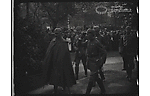
Setting up a battery of 160 mm and 140 mm cannons. Horse-drawn convoy on a flooded road. Relief of the Scottish and English troops. Laying down telegraphic lines. New 155 mm cannon and shots. A biv...
In 1917, the King's Liverpool soldiers and the King's Own Shropshire Light Infantry advance toward the front lines to take position. Stretcher-bearers attempt to cross a trench.
In 1917 in Seyne, members of the Invention Department technical assault artillery division attend the 1A tank tests on steep terrain. The machine then crosses wide trenches and ditches before passing ...
Aboard a sailboat in the Toulon harbor, the Invention Department carries out underwater listening experiments directed by Jean Perrin.
France in arms : How a citizen becomes a soldier: clothing, physical training, peeling potatoes, mess and military training. Men write "Vive la France" (Long Live France) with their bodies on the floo...
Emperor Nicolas II and the Hereditary Grand Duke salute the Russian troops who then perform gymnastic tricks, a tug-of-war, and sack race. His Majesty Nicolas II, accompanied by an archbishop, then vi...
During the First World War, Vickers manufactured munitions and war materials needed for combat. In the workshops, shrapnel and shells are manufactured by workers, while women and young girls assemble ...
French, Serbian, and Greek troops advance against Bulgarian troops in Macedonia in September 1918: the effects of artillery shots, columns of captured prisoners and equipment, views of Prilep, moving ...
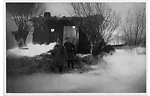
Screenshot from "Hindenburgs 70. Geburtstag im Großen Hauptquartier"
Gustav Fröhlich, Lars Hanson (from left to right)
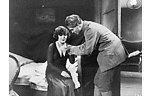
Dita Parlo, Gustav Fröhlich
Gustav Fröhlich
Still with Paul Wegener (third on the left)
Still with Lyda Salmonova, Paul Wegener (third on the left)
Paul Wegener, Lyda Salmonova
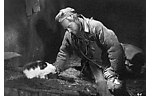
Paul Wegener
Spectator. "Der heutige Stand der Kinoreform." Bild & Film. Zeitschrift für Lichtbilderei und Kinematographie III, 3/4 (1913/ 1914): 49-56. Der Autor warnt vor den Gefahren, die vom Kino ausgingen un...
Häfker, Hermann. "Sind die 'kleinen' Kinotheater der Reform schädlich?" Bild & Film. Zeitschrift für Lichtbilderei und Kinematographie III, 3/4 (1913/1914): 58-60. Häfker geht davon aus, dass die ...
Schumacher, Carl. "Zur 'Kinodramatik'." Bild & Film. Zeitschrift für Lichtbilderei und Kinematographie III, 3/4 (1913/1914): 63-64. Schumacher stellt die Abwesenheit von Dialogen als das Hauptproblem...
O. Verf.. "Kino-Kritik." Bild & Film. Zeitschrift für Lichtbilderei und Kinematographie III, 3/4 (1913/1914): 68-69. Obwohl immer wieder Forderungen nach der Hebung des Niveaus im Kino laut würden, ...
O. Verf.. "Das Kinoplakat." Bild & Film. Zeitschrift für Lichtbilderei und Kinematographie III, 3/4 (1913/1914): 70. Meldung über die zunehmende Hebung des Niveaus von Kinoplakaten. Statt auf grelle...
O. Verf.. "Die Kinematographie auf dem 85. Naturforschertag in Wien." Bild & Film. Zeitschrift für Lichtbilderei und Kinematographie III, 3/4 (1913/1914): 70-71. Meldung über den Einsatz von Filmen ...
O. Verf.. „Polizeiverordnung für das Rheinland.“ Bild & Film. Zeitschrift für Lichtbilderei und Kinematographie III, 3/4 (1913/1914): 72-73. Meldung über den Einsatz von Filmen als illustrieren...
O. Verf.. „Ein Kinematographengesetz in Württemberg.“ Bild & Film. Zeitschrift für Lichtbilderei und Kinematographie, III, 3/4 (1913/1914): 73. Jeder Film, der öffentlich vorgeführt werde, mü...