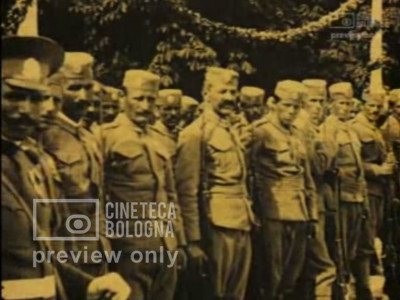
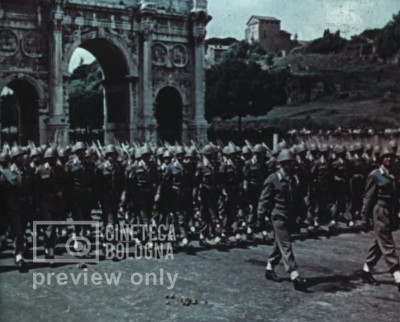
Vittorio Emanuele III di Savoia e la reale consorte Elena del Montenegro in visita ufficiale al re del Montenegro Nicola I, presso la villa reale di Rijeka Crnojevića. Il principe Ereditario Da...
The history and life of the military corps the Grenadiers of Sardinia.
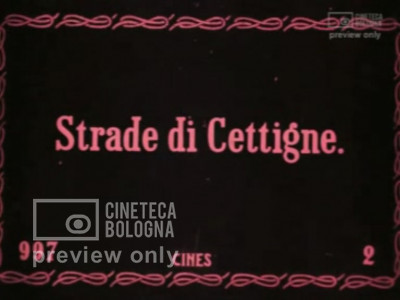
Strade di Cettigne, capitale del Regno del Montenegro. Il Palazzo dei Ministri e delle Regie Poste. Il nuovo palazzo della Legazione Italiana. Il Teatro Reale. Il Palazzo Reale. Nicola I, Re del...
The film reviews the history and art of Vienna and the empire of which it was the capital for centuries, ending with a vision of the contemporary city.
Marinetti, definito da Boccioni “poeta e impresario”, dopo la pubblicazione del primo manifesto futurista su “Le Figaro” (1909) diffonde il Manifesto tecnico della letteratura futurista,...
Špilberk is a picturesque castle dominating the modern city of Brno (Czech Republic). Over the course of time it has been a fortress, prison, museum and a place for torture. During the Inquisit...
La voce fuori campo, con accento dialettale, è quella di un emigrato del sud Italia in America, che racconta come la prima cosa che all'estero si rimpiange della madrepatria sia l'olio. Si vede...
01 – Cinema (Roma, 16/11/1976) Sulle pagine di alcuni quotidiani, articoli che parlano della crisi che sta attraversando il cinema italiano. L'attrice Agostina Belli, sul set cinematografico, ...
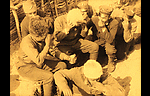
The battle of Zborov: A soldier gives to smell a rotten can to his sleeping friend.
The battle of Zborov: Several soldiers in the trench with stuffy noses. One of them holds a rotten can.
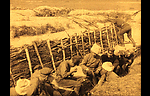
The battle of Zborov: Several soldiers sit in the trench.
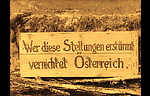
The batttle of Zborov: A board with the slogan in Austrian trenches - "Wer diese Stellungen erstürmt vernichtet Österreich."/ "A conqueror of this position will defeat Austria".
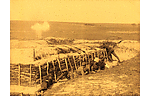
The battle of Zborov: Several soldiers hidden in the trench.
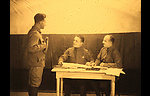
An office with two sitting Russian generals (on the left Rudolf Medek - author of the synopsis). Tomeš registers himself as a volunteer.
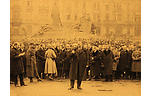
A documentary part: First days of the independent Czechoslovak Republic - František Udržal speaks to the gathering of people in front of the monument of Jan Hus.
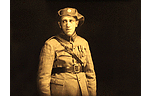
Bárta (laborer) in the uniform of Czechoslovak volunteer from France.
O. Verf.. „Kino und Kirche.“ Bild & Film. Zeitschrift für Lichtbilderei und Kinematographie III, 3/4 (1913/1914): 73-74. Beschlüsse der Fuldaer Bischofskonferenz von 20.8.1913. Schulpflichtigen ...
Felix, F.. „Die Kinematographie der Töne.“ Bild & Film. Zeitschrift für Lichtbilderei und Kinematographie III, 3/4 (1913/1914): 78-79. Meldung über erste Versuche, Film-und Tonaufnahmen zu sync...
W.R.. „Historische Filme.“ Bild & Film. Zeitschrift für Lichtbilderei und Kinematographie III, 3/4 (1913/1914): 86. Der Rezensent führt den Film als Beispiel dafür an, dass die Filmindustrie mi...
Hellwig, Albert. „Die Plakatzensur in Preussen.“ Bild & Film. Zeitschrift für Lichtbilderei und Kinematographie III,5 (1913/1914): 104-106. Rekapitulierung der Rechtslage zu Filmplakaten.
O. Verf.. „Preußischer Ministerialerlaß über das Plakat- und Reklamewesen.“ Bild & Film. Zeitschrift für Lichtbilderei und Kinematographie III, 5 (1913/1914): 111-112. Filmplakate bedürfen de...
Warstat, W.. „Kino und Schule. Von Prof. Dr. A. Sellmann.“ Bild & Film. Zeitschrift für Lichtbilderei und Kinematographie III,5 (1913/1914): 116-117. Der Rezensent sieht die Verwendung von Filmen...
Fritze, G.A.. „Die Kinematographie im Dienste der Industrie.“ Bild & Film. Zeitschrift für Lichtbilderei und Kinematographie III,6 (1913/1914): 124-128. Erörterung der bereits erfolgten Verwendu...
Felix, F.. "Rektor Lemkes „Reichsausschuß“." Bild & Film. Zeitschrift für Lichtbilderei und Kinematographie III, 6 (1913/1914): 134-137. Bericht über einen Reichsausschuss für wissenschaftlich...