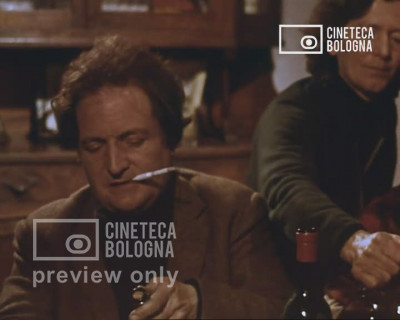
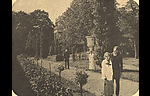
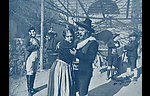
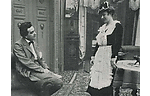
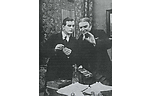
An evening at winter’s end: in Veneto, in the countryside of Treviso (in Zero Branco) the farmers have prepared bonfires for the feast of bread and wine, a propitiatory rite for a good year. T...
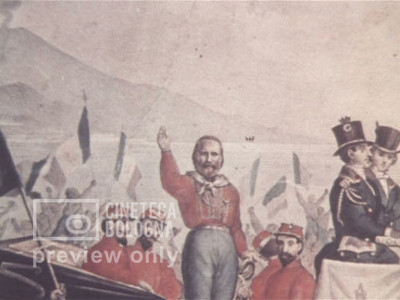
Costruito quasi interamente con illustrazioni d'epoca commentate dalla voce fuori campo, il film mette in luce i contrasti fra Garibaldi da un lato e Cavour con i Savoia dall'altro. Dopo i primi...
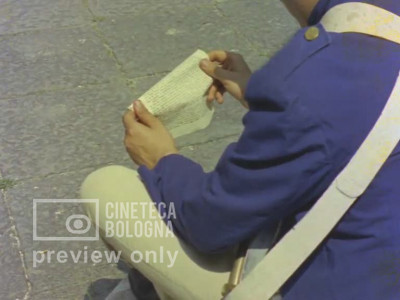
Near the bridges of Valle di Maddaloni (near Caserta), a teacher reads an excerpt from G.C. Abba’s “Noterelle di uno dei Mille” to a group of children. The excerpt is about the battle of t...
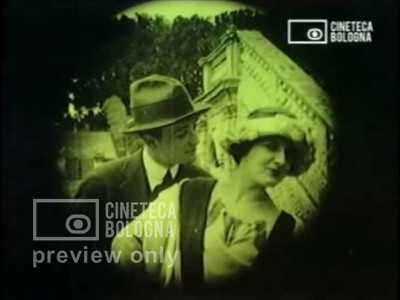
Un classico del "diva film" con la coppia romantica Francesca Bertini e Gustavo Serena, basato su un romanzo parzialmente autobiografico di Alexandre Dumas figlio pubblicato nel 1866. Questa sto...
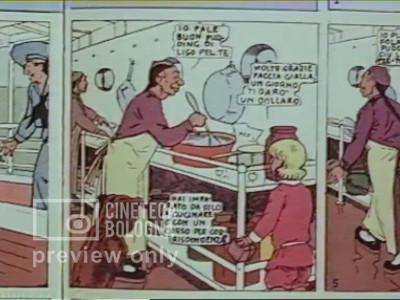
Half a century of history on the pages of the famous comic magazine “Il corriere dei piccoli”.
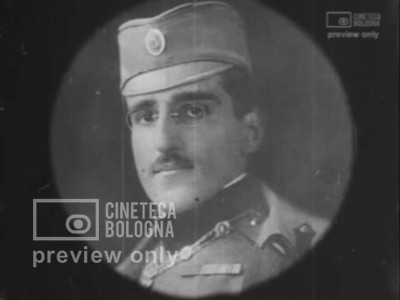
Parti frammentarie. Dopo i ritratti del principe ereditario Alessandro I di Jugoslavia (Alessandro Karađorđević) e del capo di stato maggiore dell'esercito serbo Petar Bojović, immagini dell...
Film restored in collaboration with Cinémathèque Suisse.
The film is constructed on a contemporary requirement tied to the wartime situation, seeing as Italy had gone to war with Austria in May 1915. At the end of the wedding ceremony the procession o...
Still with Uschi Elleot
Still with Henny Porten
Still from "Das blaue Zimmer"
Still from "Dämonit"
Still from "Des Malers Bettelweib"
Still from "Der Diamantensucher"
Still from "Der Feind im Land"
Still from "Der Film von der Königin Luise. 2. Abteilung: Aus Preußens schwerer Zeit"
Spectator. "Der heutige Stand der Kinoreform." Bild & Film. Zeitschrift für Lichtbilderei und Kinematographie III, 3/4 (1913/ 1914): 49-56. Der Autor warnt vor den Gefahren, die vom Kino ausgingen un...
Häfker, Hermann. "Sind die 'kleinen' Kinotheater der Reform schädlich?" Bild & Film. Zeitschrift für Lichtbilderei und Kinematographie III, 3/4 (1913/1914): 58-60. Häfker geht davon aus, dass die ...
Schumacher, Carl. "Zur 'Kinodramatik'." Bild & Film. Zeitschrift für Lichtbilderei und Kinematographie III, 3/4 (1913/1914): 63-64. Schumacher stellt die Abwesenheit von Dialogen als das Hauptproblem...
O. Verf.. "Kino-Kritik." Bild & Film. Zeitschrift für Lichtbilderei und Kinematographie III, 3/4 (1913/1914): 68-69. Obwohl immer wieder Forderungen nach der Hebung des Niveaus im Kino laut würden, ...
O. Verf.. "Das Kinoplakat." Bild & Film. Zeitschrift für Lichtbilderei und Kinematographie III, 3/4 (1913/1914): 70. Meldung über die zunehmende Hebung des Niveaus von Kinoplakaten. Statt auf grelle...
O. Verf.. "Die Kinematographie auf dem 85. Naturforschertag in Wien." Bild & Film. Zeitschrift für Lichtbilderei und Kinematographie III, 3/4 (1913/1914): 70-71. Meldung über den Einsatz von Filmen ...
O. Verf.. „Polizeiverordnung für das Rheinland.“ Bild & Film. Zeitschrift für Lichtbilderei und Kinematographie III, 3/4 (1913/1914): 72-73. Meldung über den Einsatz von Filmen als illustrieren...
O. Verf.. „Ein Kinematographengesetz in Württemberg.“ Bild & Film. Zeitschrift für Lichtbilderei und Kinematographie, III, 3/4 (1913/1914): 73. Jeder Film, der öffentlich vorgeführt werde, mü...