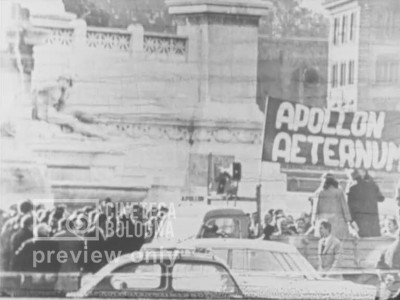
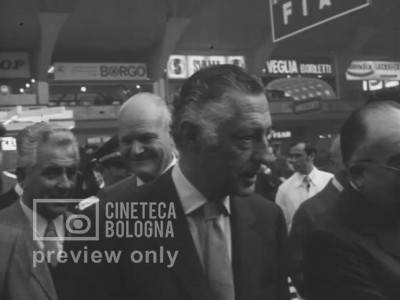
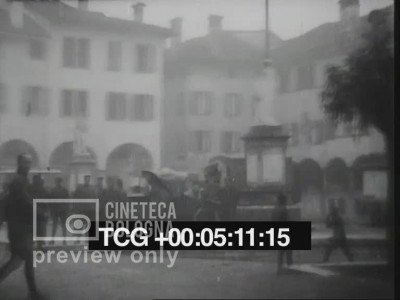
1892 - 1972: ottant'anni di storia del Partito Socialista Italiano, attraverso un percorso, costruito attraverso immagini di repertorio, che narra i cambiamenti della società italiana, gli even...
Giuseppe Garibaldi was in America when he met and married Anita Ribeira. In 1848 Garibaldi decided to go back to Italy where war was imminent, and Anita followed him. In the fighting at Vascello...
01 – Cronaca (Roma, 22/10/1970) Esterni del Palazzo della Civiltà del Lavoro all'Eur; al suo interno si svolge la cerimonia di conferimento delle insegne ai nuovi cavalieri del lavoro. Il min...
Film restored in collaboration with Cinémathèque Suisse.
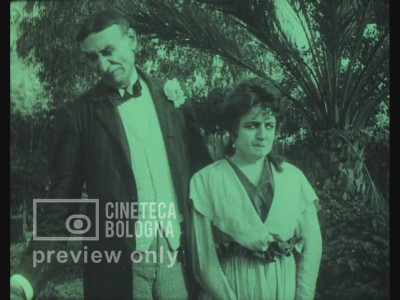
Agenore Pacifici è un vero enfant terrible. È la disperazione della sua famiglia che non ha mai potuto e saputo rendere tranquillo l’irrequieto fanciullo che ha preso specialmente di mira il...
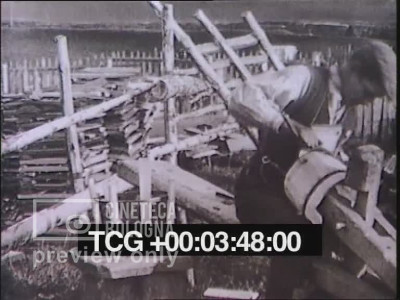
Pittoresche immagini della Alpi Carniche: vallate, viadotti, un ponte attraversato da un treno, mucche al pascolo. Oltre al paesaggio, uomini al lavoro: un vecchio spaccalegna, un falegname che ...
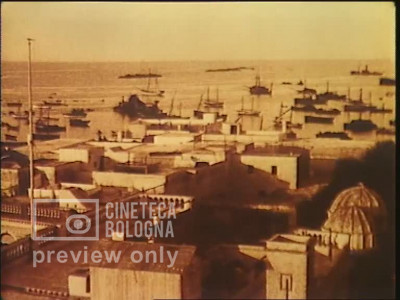
The flat tops of the houses give the town an Eastern appearance - the narrow, roughly paved thorough fare through which loosely cloaked natives proceed on mule-back, the marabouts or travelling ...
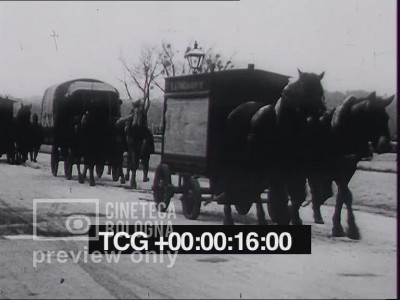
Breve frammento in cui viene mostrato l'arrivo di un cinema ambulante, trainato da cavalli, per dilettare i soldati dell'esercito austriaco durante la prima guerra mondiale.
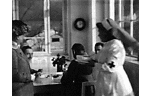
Wounded soldiers eat in a hospital room.
A military doctor shows a wounded soldier to a Red Cross delegation.
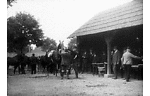
Requisition of horses.
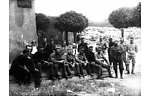
Conscripts in the assembly camp.
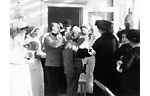
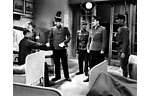
Wide shot of a hospital room. A standing First Lieutenant Schranel (actor: Vladimír Pospíšil-Born) shakes hands with First Lieutenant Liška (actor: František Kreuzmann), who is sitting on a bed w...
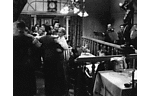
View of a dance café. Several couples are dancing on the left, including First Lieutenant Schranel (actor: Vladimír Pospíšil-Born) and Nurse Mathilde (actress: Adina Mandlová). To the right of th...
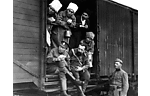
Exterior view of a train. Six Russian soldiers (prisoners of war) with Asian features are sitting or standing in the train's open door. Some of the soldiers are holding bread in their hands and all ar...
Rosenthal, Alfred. "Kinoreformatorische Entdeckungsreisen im Regierungsbezirk Minden." Bild & Film. Zeitschrift für Lichtbilderei und Kinematographie III, 1 (1913/1914): 17. A.R. berichtet von seinen...
Sellmann, Adolf. "Neue Lehrhafte Filme (Von Mitte August bis Anfang Oktober)", Bild & Film. Zeitschrift für Lichtbilderei und Kinematographie III, 1 (1913/1914): 20-22. A.S. stellt die neuesten Lehrf...
Dr. Hellwig. "Plakatwesen in Bayern." Bild & Film. Zeitschrift für Lichtbilderei und Kinematographie III, 1 (1913/1914): 23. Das Anbringen von Filmplakaten sei ohne polizeiliche Genehmigung noch imme...
O. Verf.. „Auswüchse in der Reklame der Lichtbildtheater.“ Bild & Film. Zeitschrift für Lichtbilderei und Kinematographie III,1 (1913/1914): 24. Die Stadt Bamberg habe eine Verordnung erlassen, ...
Stein, O. Th.. "Der Kinematograph als moderne Zeitung." Bild & Film. Zeitschrift für Lichtbilderei und Kinematographie III, 2 (1913/1914): 25-28. Stein beschreibt die Wochenschau in den Kinos als sch...
O.Verf.. "Kino und Katholikentag in Metz." Bild & Film. Zeitschrift für Lichtbilderei und Kinematographie III,2 (1913/1914): 40. Auf dem Katholikentag in Metz sei eine Resolution beschlossen worden, ...
Hansen, Fritz. "Photographien als Reklamebilder für Kinotheater" Bild & Film. Zeitschrift für Lichtbilderei und Kinematographie III,2 (1913/1914): 40-42. Hinweise auf das bestehende Urheberrecht in ...
Frankemölle, Wenzel. "In diesem Zeichen wirst du siegen." Bild & Film. Zeitschrift für Lichtbilderei und Kinematographie III,2 (1913/1914): 45-45. Frankemölle lobt den Historienfilm "In hoc signo v...