Uses of flying boats in the war, starting with a Felixstowe flying boat coming in to land at its base, probably Hamble, followed by a rare CE1 flying boat also landing. The main subject of the film is...
I. French language version of a newsreel of H S Cautley MP opening the municipal piggeries in London, June 1918. As a crowd watches, Cautley lights a fire under a bin in order to cook pigswill. He lad...
I. 'LONDON FLOWER FAIR. Lord Charles Beresford receives Royal party at British Ambulance Society's function in Trafalgar Square.' Admiral Lord Beresford in formal civilian dress talks with ex-Queen Am...
A glance into the everyday life of the Monarchy's prisoner of war camp in Esztergom, where primarily Russians were detained.
Gentlewomen collect donations from pedestrians in a collecting box. Children are given cake.
In 1898 the Hungarian Royal National Defense built a garrison hospital on Gyáli Street in Budapest. In 1914, due to the increase in the number of sick and wounded, a military hospital (1) for war cas...
The film was prepared during the second year of World War I, and shows the daily life of one of Budapest’s favorite walking areas, the Danube Boardwalk. Well-dressed elegant men and women are stroll...
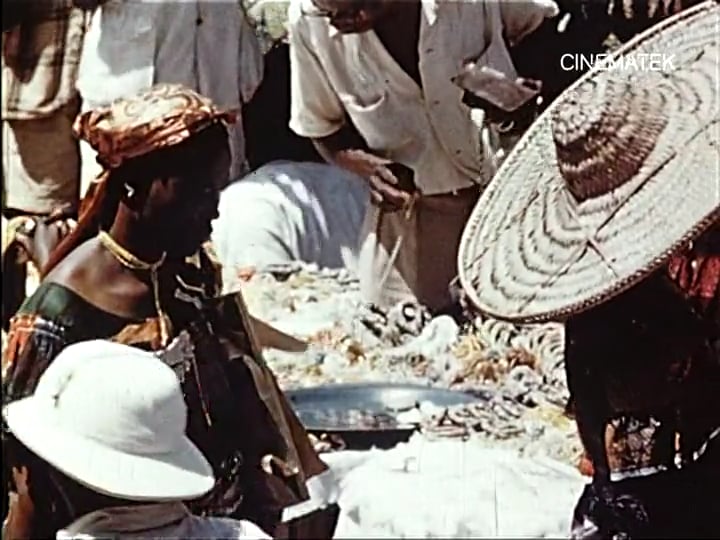
Report on Leopoldville, former capital of Belgian Congo.
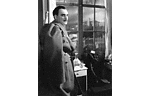
Medium shot of Rjepkin (actor: Vladimír Borský) standing next to a night stand in a hospital room. In the background is a window with a panoramic view of Brno.
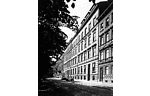
Wide shot of an empty city street with three-storeyed buildings on the right and urban greenery on the left.
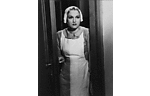
Medium shot of Nurse Mathilde (actress: Adina Mandlová) standing in a half opened door with her hand on the door handle.
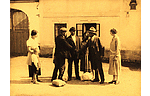
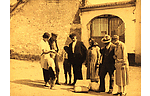
Three families on the villiage green after the mobilization. From the left Mrs. Bártová and her son, Bárta (laborer), Janda (smith) and Tomeš (farmer) pledge a loyalty to the idea of Slavonic unit...
Three families on the public green after mobilization. From the left: Mrs. Bártová, Bárta and his son, Janda and his family, Tomeš and his family. Travel packages in the foreground.
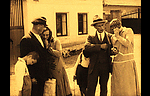
After the mobilization: women hold on men and cry. On the left Janda (smith), the second one is Tomeš (farmer).
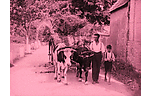
Farmer Tomeš and his son Jeníček with the oxcart full of straw.
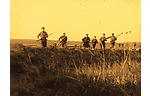
The battle of Zborov: A group of soldiers during the assault.
O. Verf.. "Kino und Schule." Bild & Film. Zeitschrift für Lichtbilderei und Kinematographie III,6 (1913/1914): 150. Der Kinoausschuss für Berliner Schulen habe seine Arbeit aufgenommen und veranstal...
O. Verf.. "Kinematographische Landesreklame." Bild & Film. Zeitschrift für Lichtbilderei und Kinematographie III,6 (1913/1914): 150. In Italien werde der Film als Werbemittel zur Ankurbelung des Tour...
Bergmann, Franz. "Die Konzessionspflicht Der Kinematographentheater." Bild & Film. Zeitschrift für Lichtbilderei und Kinematographie III,7 (1913/1914): 153-163. Bericht über das die neu erlassene Ko...
Elster, Alexander. "Kinogewerbe und Kinokunst." Bild & Film. Zeitschrift für Lichtbilderei und Kinematographie III,7 (1913/1914): 172-173. Die wirtschaftliche Lage des Kinogewerbes verhindere eine k...
Righi, Amalia. "Das Neue im Kino." Bild & Film. Zeitschrift für Lichtbilderei und Kinematographie III,7 (1913/1914): 173-174. Kurze Abhandlung über das Kino und das Theater. Besonderer Erwähnung fi...
Waldner, Dagmar. "Kino und Wahlagitation." Bild & Film. Zeitschrift für Lichtbilderei und Kinematographie III,7 (1913/1914): 174. Bericht über den Einsatz des Films, um die Wähler über die Notwend...