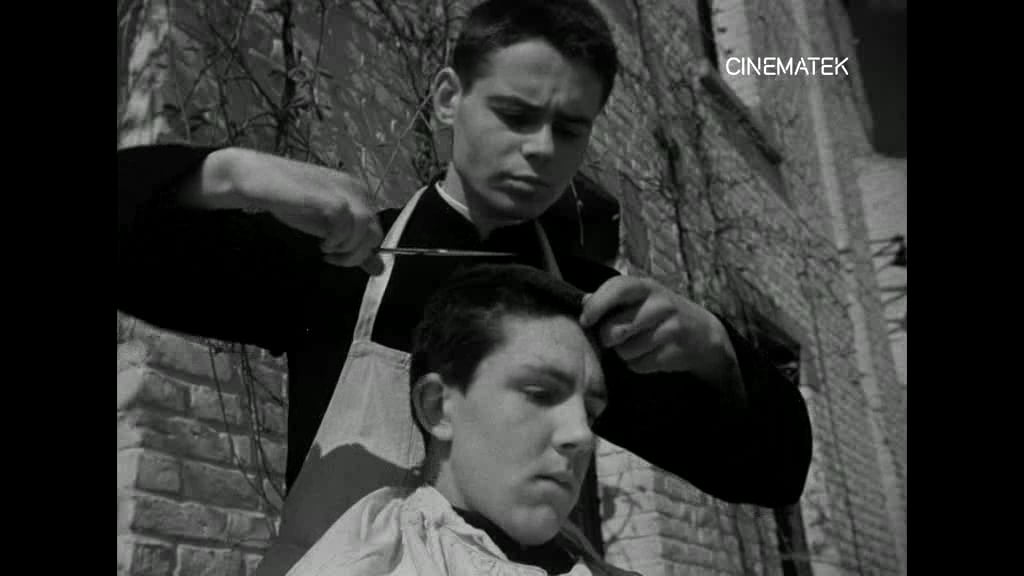
Promotional documentary on missionary work in Belgian Congo. Commissioned by the Priests of the Sacred Heart, who are trying to recruit new missionaries for the Belgian colony of Congo.
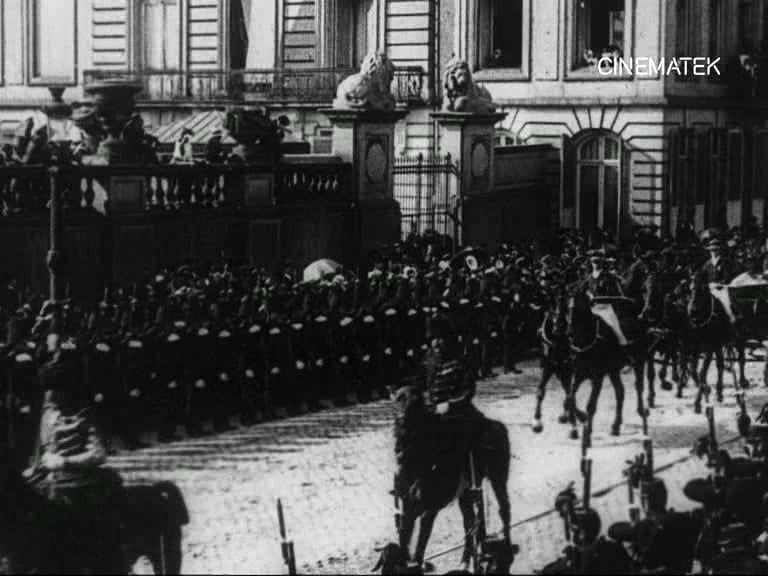
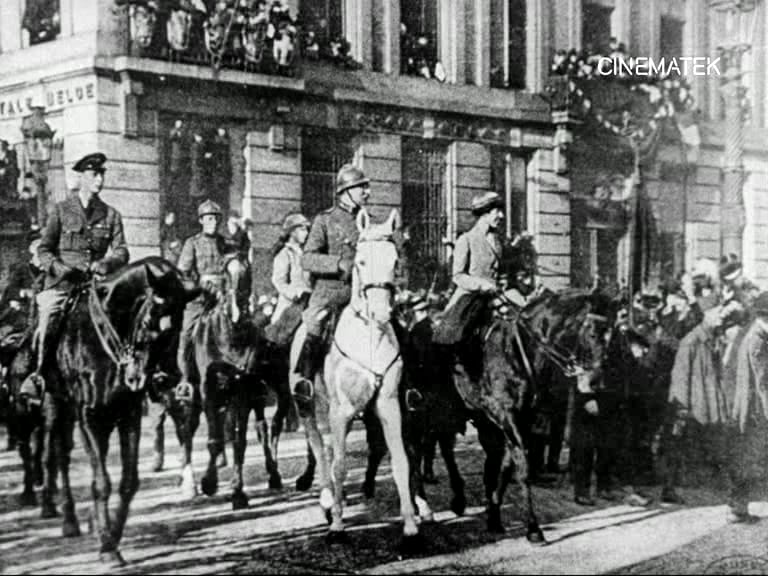
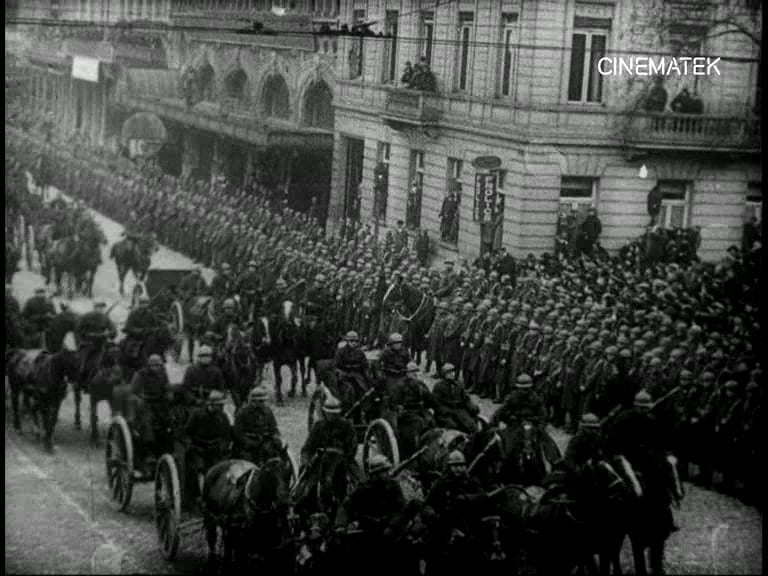
War-time report, probably broadcasted in July-August 1919.
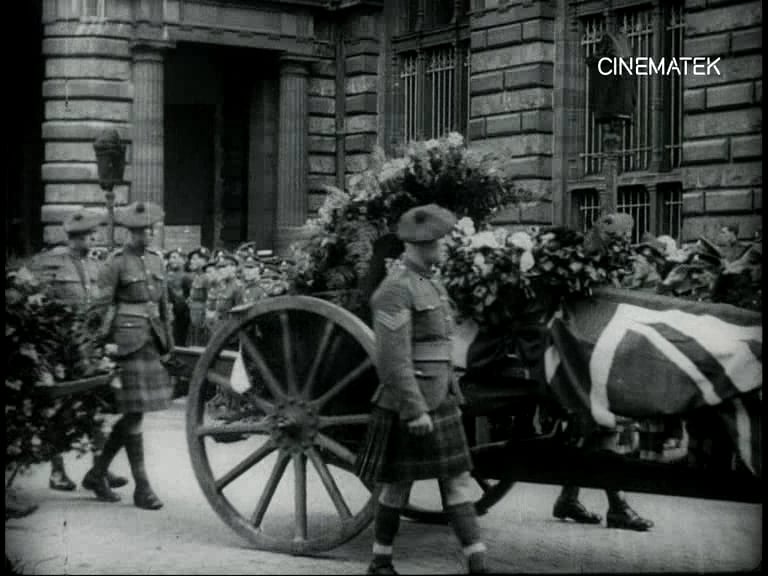
News report about the memorial service, held in Bruges and Antwerp, following the repatriation of the remains of Charles Fryatt, an English captain accused, condemned and shot by the Germans for pirac...
Various newsreel items. Among others, general Gouraud makes a speech during a memorial service of the First World War at the Tomb of the Unknown Soldier in Paris.
Documentary about the life of King Albert I of Belgium. The film is entirely composed of archival footage.
Biography about Adolphe Max (1869-1939), former mayor of Brussels. In 1914 he was arrested and imprisoned because of his resistance against the German oppressor.
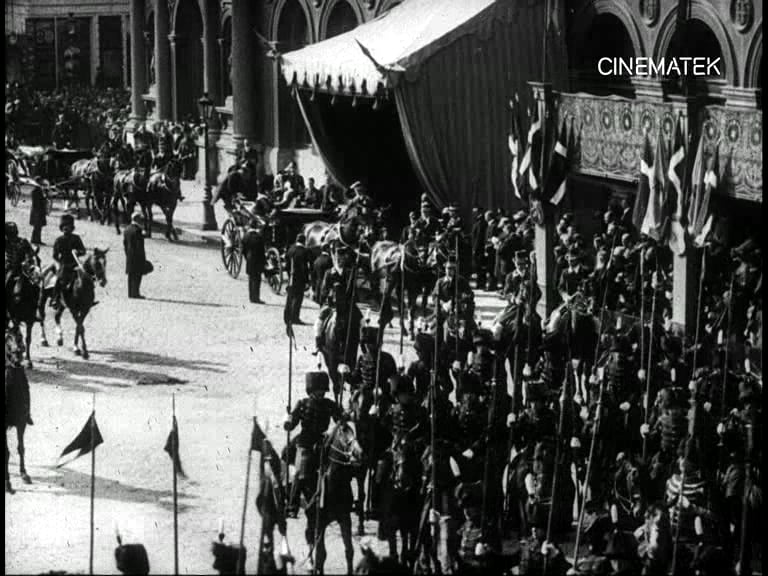
Coverage on the visit of Danish King Christian X to Belgium a few months before the start of World War One.
Retrospect on some of Cardinal Mercier's public attendances, followed by a report on Cardinal Mercier's funeral.
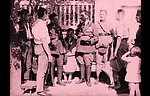
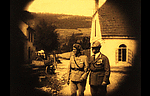
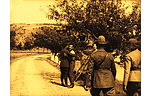
Reunion of families after war. In the middle stand Tomeš, Janda and Bárta in uniforms of volunteers. Women sit behind and sons talk with fathers.
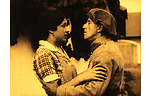
Volunteer Bárta (laborer) encounters his wife.
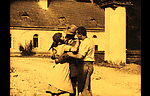
Volunteer Janda (smith) in Italian uniform encounters his family after the end of the war.
Janda´s son in the apron and volunteer Janda in Italian uniform.
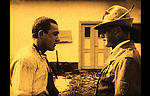
From the left: Volunteer Bárta in French uniform, volunteer Janda in Italian uniform.
Tomeš encounters his wife and son after the return from the war. Tomeš hugs his son. His wife stands nearby and smiles at Janda and Bárta.
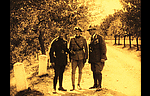
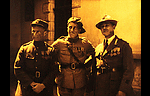
From the left: Tomeš (Russian uniform), Bárta (French uniform) and Janda (Italian uniform). Volunteers rest during their coming home.
From the left: Tomeš (Russian uniform), Bárta (French uniform) and Janda (Italian uniform).
Spectator. "Der heutige Stand der Kinoreform." Bild & Film. Zeitschrift für Lichtbilderei und Kinematographie III, 3/4 (1913/ 1914): 49-56. Der Autor warnt vor den Gefahren, die vom Kino ausgingen un...
Häfker, Hermann. "Sind die 'kleinen' Kinotheater der Reform schädlich?" Bild & Film. Zeitschrift für Lichtbilderei und Kinematographie III, 3/4 (1913/1914): 58-60. Häfker geht davon aus, dass die ...
Schumacher, Carl. "Zur 'Kinodramatik'." Bild & Film. Zeitschrift für Lichtbilderei und Kinematographie III, 3/4 (1913/1914): 63-64. Schumacher stellt die Abwesenheit von Dialogen als das Hauptproblem...
O. Verf.. "Kino-Kritik." Bild & Film. Zeitschrift für Lichtbilderei und Kinematographie III, 3/4 (1913/1914): 68-69. Obwohl immer wieder Forderungen nach der Hebung des Niveaus im Kino laut würden, ...
O. Verf.. "Das Kinoplakat." Bild & Film. Zeitschrift für Lichtbilderei und Kinematographie III, 3/4 (1913/1914): 70. Meldung über die zunehmende Hebung des Niveaus von Kinoplakaten. Statt auf grelle...
O. Verf.. "Die Kinematographie auf dem 85. Naturforschertag in Wien." Bild & Film. Zeitschrift für Lichtbilderei und Kinematographie III, 3/4 (1913/1914): 70-71. Meldung über den Einsatz von Filmen ...
O. Verf.. „Polizeiverordnung für das Rheinland.“ Bild & Film. Zeitschrift für Lichtbilderei und Kinematographie III, 3/4 (1913/1914): 72-73. Meldung über den Einsatz von Filmen als illustrieren...
O. Verf.. „Ein Kinematographengesetz in Württemberg.“ Bild & Film. Zeitschrift für Lichtbilderei und Kinematographie, III, 3/4 (1913/1914): 73. Jeder Film, der öffentlich vorgeführt werde, mü...