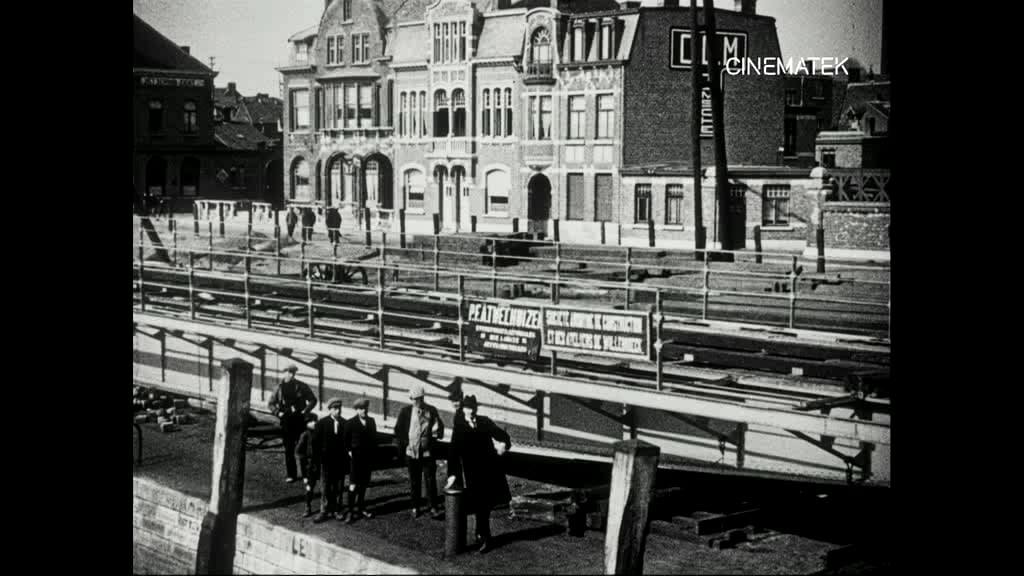
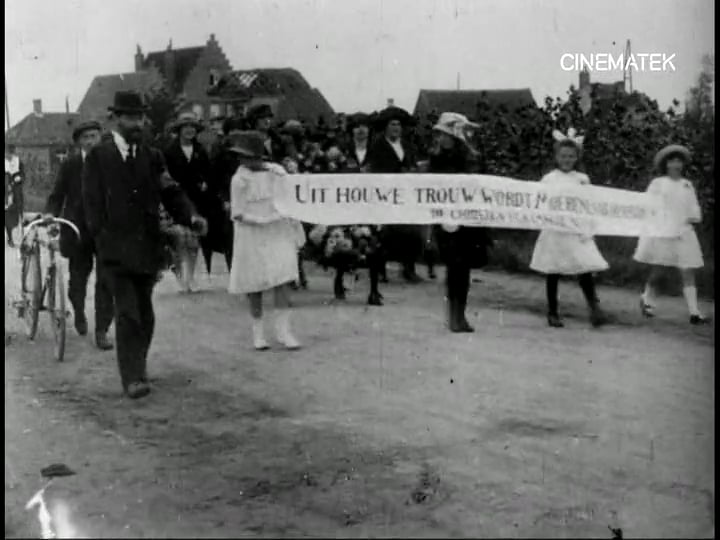
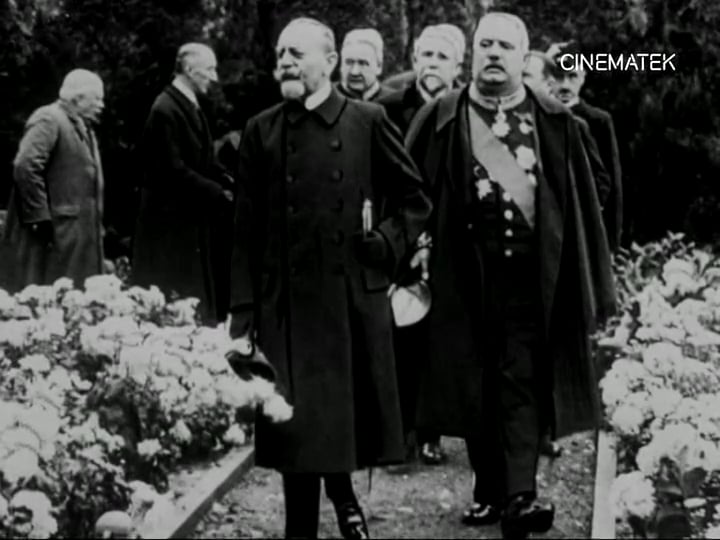
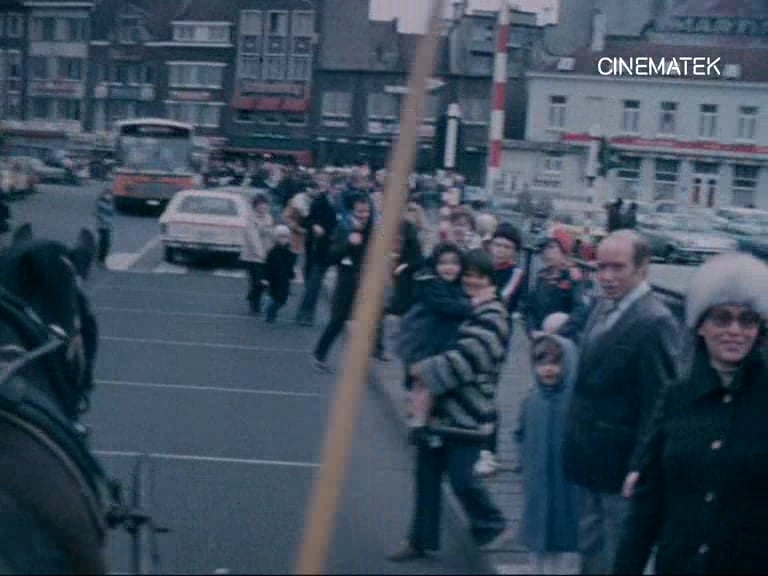
Newsitems. Amongst others, General Foch and Johnson having a conversation.
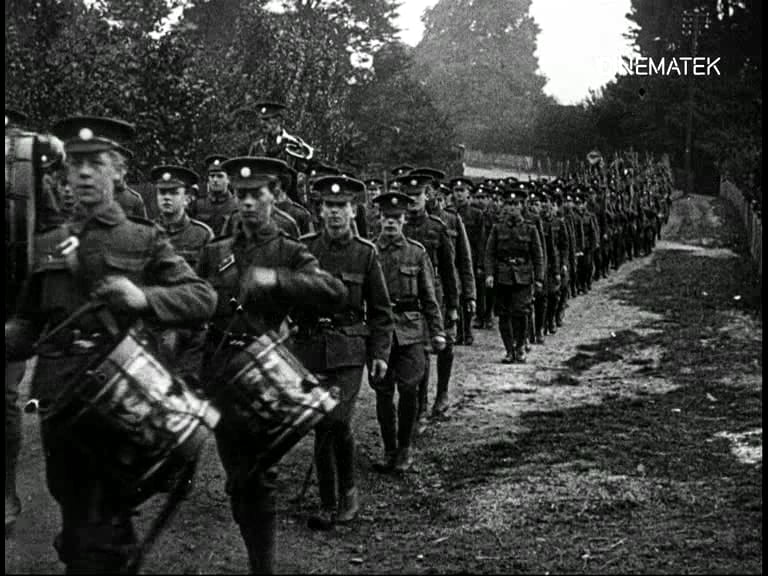
An unidentified news report about various aspects of the First World War. Great emphasis is being placed on the British Army and the recruitment of soldiers.
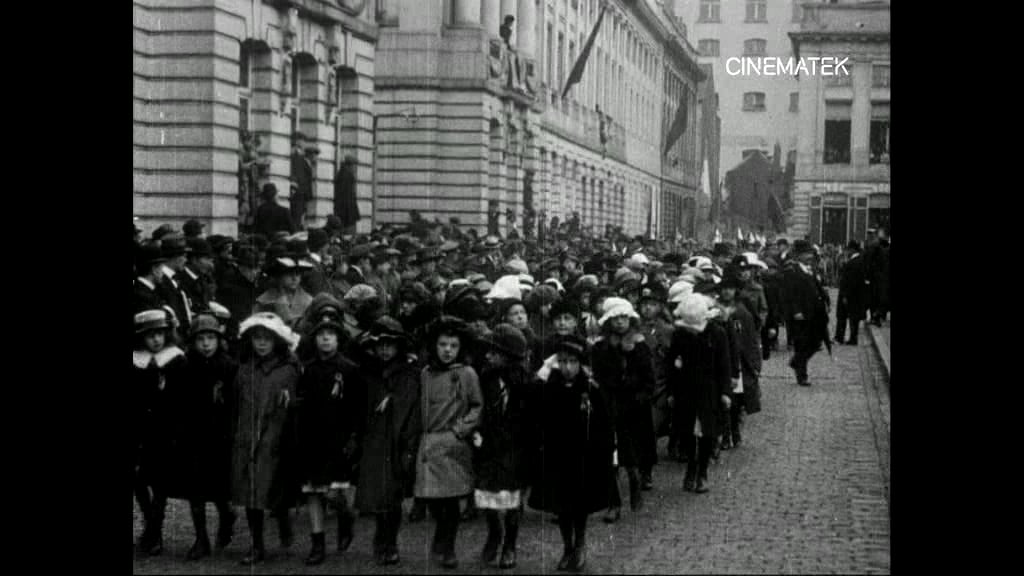
War-time report, probably broadcasted in November 1919.
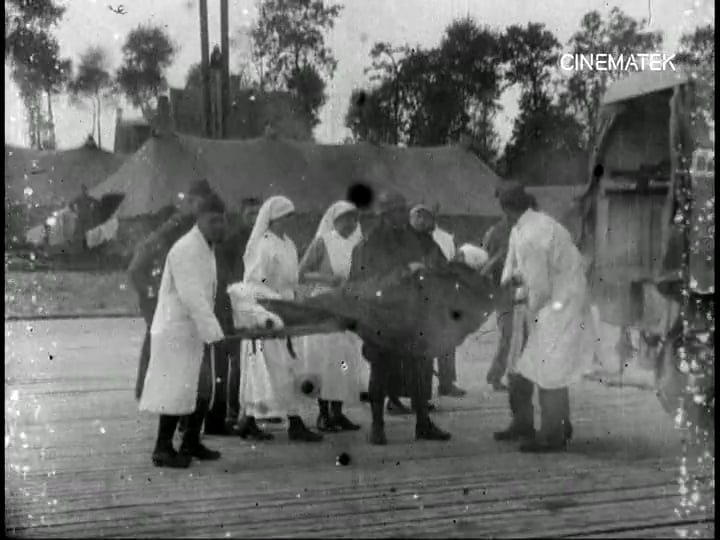
Report on the Red Cross hospitals in De Panne and Nieuwpoort during the First World War.
News footage filmed almost entirely by Ernest De Bock, a printer who ran the Gaumont cinema in Temse. He filmed local events, edited them and did the inter-titles. A second cameraman worked on the fil...
Chain of pictures and moving images about the origination of the annual Yser pilgrimage from 1920 to 1929.
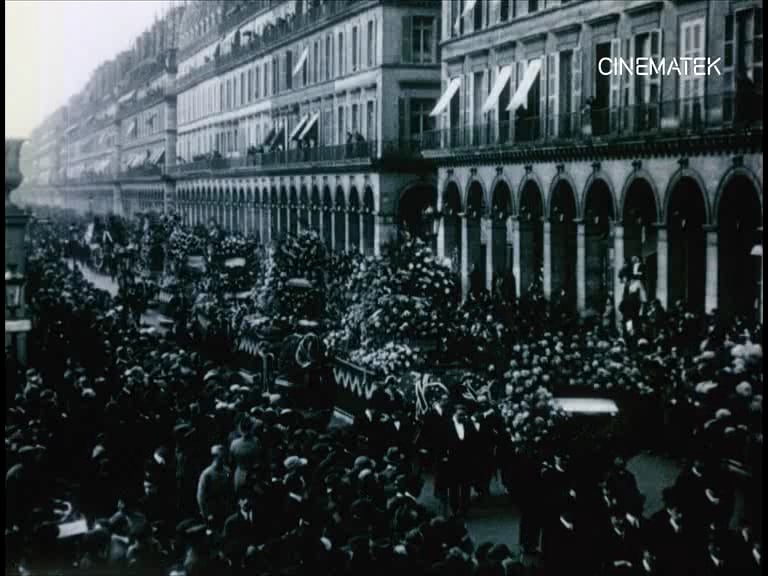
Tribute to former mayor of Brussels: Adolphe Max.
Four individual newsitems. One item specifically focuses on World War I: the 60th anniversary of the Armistice is being commemorated in the presence of Prince Karel and mayor Jan Piers in Ostend. They...
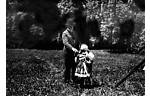
Girl and boy in folk costumes embrace each other on the meadow. Behind them stands the President of the Czechoslovak Republic Tomáš Garrigue Masaryk.
Student Jiří Voldán, after the mobilisation order of 1914, is called up to serve in the Austro-Hungarian army to fight against Russia. With his Czech and Slovak compatriots, he decides to cross to ...
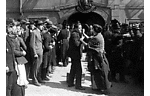
A group of civilians and policemen. In the middle stands infantryman Kubík (actor: Václav Kubásek) on suit. Next to Kubík stands a woman on skirt and shawl.
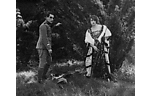
Jiří Voldán (actor: Vladimír Ch. Vladimírov) and his fiancée Maryša (actress: Suzanne Marwille) with the rifle.
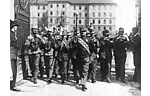
Austrian military band
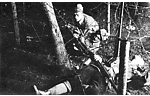
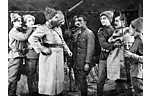
A group of Russian soldiers with fur hats, rifles and bayonets.
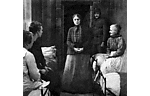
Mother of Jiří Voldán (actress: Marie Ptáková) in the female prison. Another women sit on the bed. At the door stands a soldier.
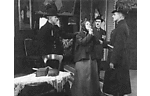
Mother of Jiří Voldán (actress: Marie Ptáková) between two policemen in uniforms. Behind her stands secret policeman.
O. Verf.. „Krieg und Kino.“ Der Kinematograph 397 (1914): 3-4. Bericht, wie bislang der Film in Kriegen eingesetzt worden sei. Ratschläge an Kinobesitzer, wie sie sich zu verhalten hätten. Mutma...
O. Verf.. „Mars regiert die Stunde.“ Der Kinematograph 397 (1914): 5-8. Aufruf an die Kinoindustrie, sich angesichts des Krieges in die Dienste des Vaterlandes zu stellen. Vorschlag, möglichst ak...
Mit der Kamera in der Schlachtfront.“ Der Kinematograph 397 (1914): 7. Werbeanzeige, die die Bedeutung der Filmaufnahmen gerade angesichts des drohenden Krieges hervorhebt.
Aubinger, Josef: „Die Kinematographie in Kriegszeiten.“ Der Kinematograph 398 (1914): 3-5. Artikel, der die mögliche Zukunft des Kinowesens im Krieg beschreibt. Die wirtschaftliche Lage der Kinos...
O. Verf.. „Schliesst die Kinos nicht.“ Der Kinematograph 399 (1914): 3-4. Aufruf an die Kinoindustrie, die Kinos nicht zu schließen, da das Volk in Kriegszeiten Ablenkung brauche. Die Eintrittspr...
Monopolfilm-Vertriebs-GmbH..“Patriotisches Kriegs-Programm.“ Der Kinematograph 399 (1914): 5. Werbung für das aktuelle Filmprogramm der Monopolfilm GmbH.
Asta-Nielsen-Lichtspiele GmbH. „Bismarck. Die neuesten Aufnahmen aus den Kriegstagen.“ Der Kinematograph 400 (1914): 1. Werbung, mit dem Hinweis, dass der Stoff des Filmes den ernsten Kriegstagen ...
O. Verf.. „Der Mangel an Aktualitäten.“ Der Kinematograph 400 (1914): 3-4. Artikel, der den Mangel an aktuellen Aufnahmen aus dem Krieg beklagt. Der Krieg sei die richtige Gelegenheit für die Pr...