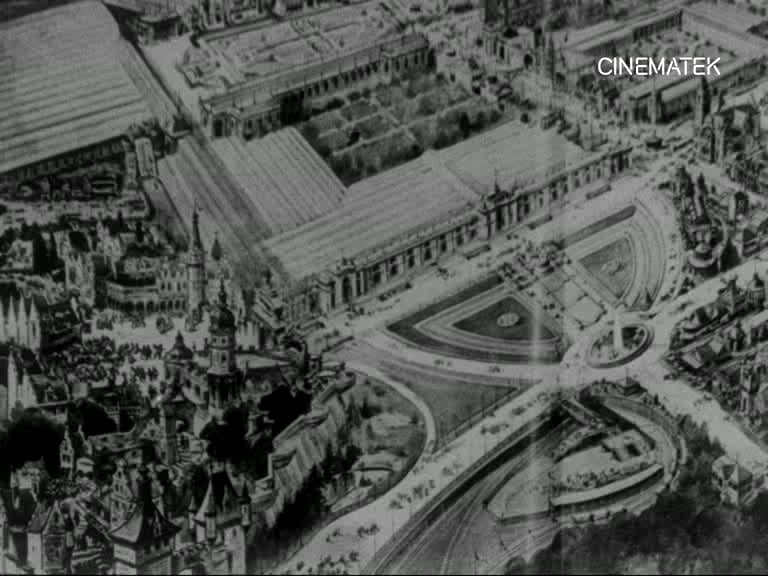
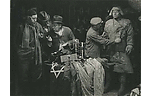
Large scale police raids on smugglers on the Budapest-Vienna railway line, on ships sailing the Danube, and along the nation’s border. "The film, made using official equipment, shows the exciting pu...
Documentary about Albert I, King of Belgium.
(Reel 1) Men board troopships, including SS Leviathan, in New York harbour. On the crossing there are sports, a dance, and jive by black troops. A submarine attack is repelled by destroyers. The men d...
(Reel 1) King George V and General Sir Herbert Plumer, commanding Second Army to which the two divisions were attached, are greeted by 30th (Old Hickory) Division commander, Major-General Edward M Lew...
The film is partially completed, and shows some signs of proper editing, but scenes may break off abruptly in one reel and resume in another reel. Throughout the film numerous reporters, press photogr...
The footage, filmed on May 30, 1915, records a WWI intercession procession before the Inner City Parish Church, the Basilica, and the Parliament. The creators of the film concentrated on the famous pe...
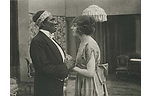
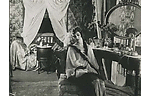
The daughter of the farmer András Balogh, Juli, is confused by the sight of a circus, she leaves her native village secretly and enters into an engagement with the dance master at a night club in the...
(Reel 1) The film opens with unrelated scenes of the Western Front, mainly the Marne and Château-Thierry areas. Then Theodore Roosevelt beside the grave of his son Quentin. Behind-the-lines scenes of...
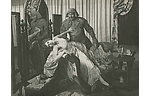
Paul Wegener, Lyda Salmonova
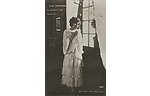
Lyda Salmonova
Lyda Salmonova
Lyda Salmonova, Paul Wegener
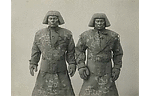
Golem-figures by sculptor Rudolf Belling
Paul Wegener
Still with Paul Wegener (in the middle)
Still with Henrik Galeen (first on the left), Paul Wegener (first from the right)
P., E.. „Französische und englische Films!.“ Der Kinematograph 400 (1914): 7-8. Der Verfasser behauptet, das Filmwesen sei von französischen Agenten beeinflusst. Jahrzehntelang hätten französi...
O. Verf.. „Der Kinematograph im Dienste des Heeres.“ Der Kinematograph 401 (1914): 3-4. Artikel über die Möglichkeiten, Filmtechnik militärisch nutzbar zu machen. Der Film sei nicht nur zu Zwec...
Martin Dentler GmbH. „Die richtigen Films zur richtigen Zeit.“ Der Kinematograph, 401 (1914): 11. Werbeanzeige, die mit der Bedeutung der beworbenen Filme angesichts des Krieges wirbt.
Eiko Film. „"Eiko-Woche“ ist die beste Kriegsberichterstattung" Der Kinematograph 404 (1914): 1.
Emscher, Horst: „Der Krieg und die deutsche Filmindustrie.“ Der Kinematograph 404 (1914): 5-6. Erörterung der wirtschaftlichen Lage der deutschen Filmindustrie. Entgegnet dem Vorwurf, dass die Be...
O. Verf.. „Das Programm in Kriegszeiten.“ Der Kinematograph 405 (1914): 8. Obwohl viele Kinos geschlossen hätten, würden die Besucherzahlen in den Kinos immer weiter zunehmen. Dies sei insbesond...
Eiko Film, Ich kenne keine Parteien mehr, Der Kinematograph, 406, (1914), S. 1. Werbeanzeige mit Hinweis auf "Beseitigung der Zensurschwierigkeiten".
Nordisk Films GmbH, Jede Woche neue Kriegs-Aufnahmen, Der Kinematograph 406, (1914), S. 3. "Jede Woche abwechselnd neue Kriegsaufnahmen vom Westen und Osten (eigene Expeditionen)".