Large scale police raids on smugglers on the Budapest-Vienna railway line, on ships sailing the Danube, and along the nation’s border. "The film, made using official equipment, shows the exciting pu...
Documentary about Albert I, King of Belgium.
(Reel 1) Men board troopships, including SS Leviathan, in New York harbour. On the crossing there are sports, a dance, and jive by black troops. A submarine attack is repelled by destroyers. The men d...
(Reel 1) King George V and General Sir Herbert Plumer, commanding Second Army to which the two divisions were attached, are greeted by 30th (Old Hickory) Division commander, Major-General Edward M Lew...
The film is partially completed, and shows some signs of proper editing, but scenes may break off abruptly in one reel and resume in another reel. Throughout the film numerous reporters, press photogr...
The footage, filmed on May 30, 1915, records a WWI intercession procession before the Inner City Parish Church, the Basilica, and the Parliament. The creators of the film concentrated on the famous pe...
The daughter of the farmer András Balogh, Juli, is confused by the sight of a circus, she leaves her native village secretly and enters into an engagement with the dance master at a night club in the...
(Reel 1) The film opens with unrelated scenes of the Western Front, mainly the Marne and Château-Thierry areas. Then Theodore Roosevelt beside the grave of his son Quentin. Behind-the-lines scenes of...
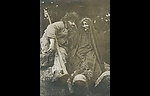
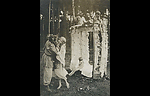
Rochus Gliese, Paul Wegener (from left to right)
Still with Lyda Salmonova, Paul Wegener (on the right, front)
Arthur Ehrens, Paul Wegener (from left to right)
Paul Wegener, Hedwig Gutzeit
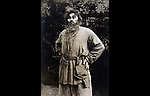
Paul Wegener
Paul Wegener, Lyda Salmonova
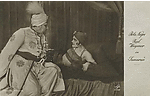
Paul Wegener, Pola Negri
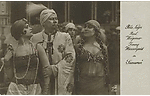
Pola Negri, Paul Wegener, Jenny Hasselquist (from left to right)
Spectator. "Der heutige Stand der Kinoreform." Bild & Film. Zeitschrift für Lichtbilderei und Kinematographie III, 3/4 (1913/ 1914): 49-56. Der Autor warnt vor den Gefahren, die vom Kino ausgingen un...
Häfker, Hermann. "Sind die 'kleinen' Kinotheater der Reform schädlich?" Bild & Film. Zeitschrift für Lichtbilderei und Kinematographie III, 3/4 (1913/1914): 58-60. Häfker geht davon aus, dass die ...
Schumacher, Carl. "Zur 'Kinodramatik'." Bild & Film. Zeitschrift für Lichtbilderei und Kinematographie III, 3/4 (1913/1914): 63-64. Schumacher stellt die Abwesenheit von Dialogen als das Hauptproblem...
O. Verf.. "Kino-Kritik." Bild & Film. Zeitschrift für Lichtbilderei und Kinematographie III, 3/4 (1913/1914): 68-69. Obwohl immer wieder Forderungen nach der Hebung des Niveaus im Kino laut würden, ...
O. Verf.. "Das Kinoplakat." Bild & Film. Zeitschrift für Lichtbilderei und Kinematographie III, 3/4 (1913/1914): 70. Meldung über die zunehmende Hebung des Niveaus von Kinoplakaten. Statt auf grelle...
O. Verf.. "Die Kinematographie auf dem 85. Naturforschertag in Wien." Bild & Film. Zeitschrift für Lichtbilderei und Kinematographie III, 3/4 (1913/1914): 70-71. Meldung über den Einsatz von Filmen ...
O. Verf.. „Polizeiverordnung für das Rheinland.“ Bild & Film. Zeitschrift für Lichtbilderei und Kinematographie III, 3/4 (1913/1914): 72-73. Meldung über den Einsatz von Filmen als illustrieren...
O. Verf.. „Ein Kinematographengesetz in Württemberg.“ Bild & Film. Zeitschrift für Lichtbilderei und Kinematographie, III, 3/4 (1913/1914): 73. Jeder Film, der öffentlich vorgeführt werde, mü...