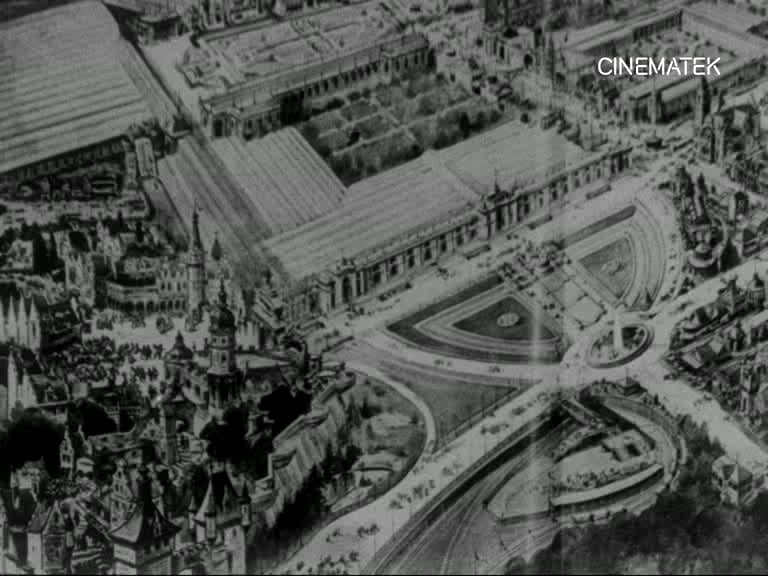
Large scale police raids on smugglers on the Budapest-Vienna railway line, on ships sailing the Danube, and along the nation’s border. "The film, made using official equipment, shows the exciting pu...
Documentary about Albert I, King of Belgium.
(Reel 1) Men board troopships, including SS Leviathan, in New York harbour. On the crossing there are sports, a dance, and jive by black troops. A submarine attack is repelled by destroyers. The men d...
(Reel 1) King George V and General Sir Herbert Plumer, commanding Second Army to which the two divisions were attached, are greeted by 30th (Old Hickory) Division commander, Major-General Edward M Lew...
The film is partially completed, and shows some signs of proper editing, but scenes may break off abruptly in one reel and resume in another reel. Throughout the film numerous reporters, press photogr...
The footage, filmed on May 30, 1915, records a WWI intercession procession before the Inner City Parish Church, the Basilica, and the Parliament. The creators of the film concentrated on the famous pe...
The daughter of the farmer András Balogh, Juli, is confused by the sight of a circus, she leaves her native village secretly and enters into an engagement with the dance master at a night club in the...
(Reel 1) The film opens with unrelated scenes of the Western Front, mainly the Marne and Château-Thierry areas. Then Theodore Roosevelt beside the grave of his son Quentin. Behind-the-lines scenes of...
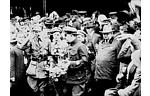
Ceremonial blessing of the flag (28th September 1914) of Czech legion in Kiev.
Mobilization in Great Britain. Ceremonial march of British military band in traditional fur hats.
Mobilization in Germany: Train with military equipment rides on front.
Czechoslovak volunteers are welcome in Chicago expants living in the USA.
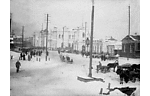
A general view of the events in front of the snow-covered railway station in Irkutsk.
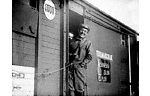
Smoking soldier at the door wagon with the inscription "Gunsmith wokshop, 3rd Regiment."
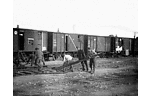
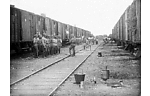
Technical troops maintained in good repair railway tracks - covering the underside of rails.
Czechoslovak volunteers on a small station in Siberia.
Dr. Sylva Luxor, "Neue Angriffe des „Vorwärts“ gegen das Kino", Der Kinematograph, 406, (1914), S. 8-9. Entgegnungen auf die Vorwürfe der Sozialdemokraten, die Kriegslage zur eigenen Bereicherun...
Edgar Költsch, Die Vorteile durch den Krieg für das Kinotheater, Der Kinematograph, 407, (1914), S. 11-12. Auch wenn es nicht so aussehe, habe das Kino durch den Krieg einen Aufschwung erlebt. Insbe...
Aus der Praxis, Der Kinematograph, 407, (1914), S. 18-22. Das Filmen auf dem Kriegsschauplatz sei nur noch mit Genehmigung des Generaltstabs erlaubt. Kommentierung vom Kriegsaufnahmen in Kinos durch ...
Horst Emscher, Der Film im Dienste der Politik, Der Kinematograph, 410, (1914), S. 15-16. Der Autor hebt hervor, dass die Kriegsführung auf publizistischer Ebene, mit der die Meinung des Auslands bee...
Kriegsecho in der Kinomusik, Der Kinematograph, 411, (1914), S. 18-19. Bericht über die musikalische Untermalung von Kriegsaufnahmen durch die Kinoorchester, die oft als störend empfunden würden.
Neuheiten auf dem Berliner Filmmarkte, Der Kinematograph, 413, (1914), S. 18-20. "Deutsche Helden" wird als Film mit ergreifender Handlung und gut nachgestellten Kampfszenen bezeichnet, der seiner Wir...
Berthold Baer, Wie lange noch ?, Der Kinematograph, 415, (1914), S. 21-22 Klage über einseitig deutschenfeindliche Kriegsberichterstattung in amerikanischen Kinos. Forderung nach deutschen Aufnahmen,...
Neuheiten auf dem Berliner Filmmarkte, Der Kinematograph, 416, (1914), S. 19-20. Rezension der Kinoneuerscheinungen. Die Zahl der rezensierten Unterhaltungsfilme (in denen Soldaten zwar dargestellt we...