The film emphasises the pre-war uniqueness of Britain, rich, insular, with a strong trading position and a free democracy united under the constitutional monarchy. The only pre-war violence comes in t...
(Reel 1) Training the New Army - "cheery non-slackers" undergo PT, drill and bayonet practice, mounting and sabre drill for cavalry. (Reel 2) Manufacture of a 15-inch naval gun and firing trials. (Ree...
The wife of Lőrinc Gáthy (Mr. Wickfield in the Croatian version) dies in childbirth. A female relative offers to take care of the motherless child and the household, but Gáthy declines the offer be...
I. The build-up to war from the earliest days of film record, showing the various crowned heads of Europe.II. The Balkan wars of 1912, the development of Germany's Navy, and the inauguration of Presid...
(Reel 1) The training of a naval cadet - Pangbourne, HMS Worcester, HMS Medway. (Reel 2) Scenes from the building of a merchant vessel. Shots of a Standard Tanker being launched on the Clyde, female d...
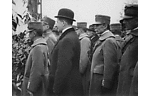
Tomáš Garrigue Masaryk met the king of Italy Vittorio Emanuele III. di Savoia in Batavia.
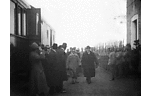
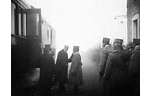
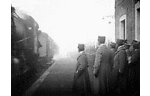
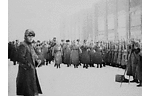
General Štefánik on the visit of the Czechoslovak army in Jekaterinburg. Ceremonial handover of the flag.
General Štefánik on the visit of the Czechoslovak army in Jekaterinburg. On his right side general Jan Syrový.
General Štefánik on the visit of the Czechoslovak army in Jekaterinburg.
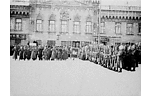
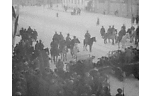
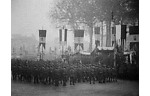
Regiments of Czechoslovak volunteers in Padova swear to the flegs with the participation of the Italian king Vittorio Emanuele III. di Savoia and Czech political representation.
P., E.. „Französische und englische Films!.“ Der Kinematograph 400 (1914): 7-8. Der Verfasser behauptet, das Filmwesen sei von französischen Agenten beeinflusst. Jahrzehntelang hätten französi...
O. Verf.. „Der Kinematograph im Dienste des Heeres.“ Der Kinematograph 401 (1914): 3-4. Artikel über die Möglichkeiten, Filmtechnik militärisch nutzbar zu machen. Der Film sei nicht nur zu Zwec...
Martin Dentler GmbH. „Die richtigen Films zur richtigen Zeit.“ Der Kinematograph, 401 (1914): 11. Werbeanzeige, die mit der Bedeutung der beworbenen Filme angesichts des Krieges wirbt.
Eiko Film. „"Eiko-Woche“ ist die beste Kriegsberichterstattung" Der Kinematograph 404 (1914): 1.
Emscher, Horst: „Der Krieg und die deutsche Filmindustrie.“ Der Kinematograph 404 (1914): 5-6. Erörterung der wirtschaftlichen Lage der deutschen Filmindustrie. Entgegnet dem Vorwurf, dass die Be...
O. Verf.. „Das Programm in Kriegszeiten.“ Der Kinematograph 405 (1914): 8. Obwohl viele Kinos geschlossen hätten, würden die Besucherzahlen in den Kinos immer weiter zunehmen. Dies sei insbesond...
Eiko Film, Ich kenne keine Parteien mehr, Der Kinematograph, 406, (1914), S. 1. Werbeanzeige mit Hinweis auf "Beseitigung der Zensurschwierigkeiten".
Nordisk Films GmbH, Jede Woche neue Kriegs-Aufnahmen, Der Kinematograph 406, (1914), S. 3. "Jede Woche abwechselnd neue Kriegsaufnahmen vom Westen und Osten (eigene Expeditionen)".