The film emphasises the pre-war uniqueness of Britain, rich, insular, with a strong trading position and a free democracy united under the constitutional monarchy. The only pre-war violence comes in t...
(Reel 1) Training the New Army - "cheery non-slackers" undergo PT, drill and bayonet practice, mounting and sabre drill for cavalry. (Reel 2) Manufacture of a 15-inch naval gun and firing trials. (Ree...
The wife of Lőrinc Gáthy (Mr. Wickfield in the Croatian version) dies in childbirth. A female relative offers to take care of the motherless child and the household, but Gáthy declines the offer be...
I. The build-up to war from the earliest days of film record, showing the various crowned heads of Europe.II. The Balkan wars of 1912, the development of Germany's Navy, and the inauguration of Presid...
(Reel 1) The training of a naval cadet - Pangbourne, HMS Worcester, HMS Medway. (Reel 2) Scenes from the building of a merchant vessel. Shots of a Standard Tanker being launched on the Clyde, female d...
Wounded soldiers eat in a hospital room.
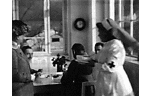
A military doctor shows a wounded soldier to a Red Cross delegation.
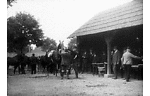
Requisition of horses.
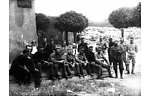
Conscripts in the assembly camp.
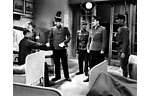
Wide shot of a hospital room. A standing First Lieutenant Schranel (actor: Vladimír Pospíšil-Born) shakes hands with First Lieutenant Liška (actor: František Kreuzmann), who is sitting on a bed w...
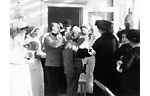
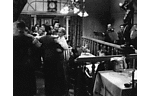
View of a dance café. Several couples are dancing on the left, including First Lieutenant Schranel (actor: Vladimír Pospíšil-Born) and Nurse Mathilde (actress: Adina Mandlová). To the right of th...
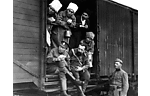
Exterior view of a train. Six Russian soldiers (prisoners of war) with Asian features are sitting or standing in the train's open door. Some of the soldiers are holding bread in their hands and all ar...
Neuheiten auf dem Berliner Filmmarkte, Der Kinematograph, 418, (1914), S. 27-35.
Presse-Stimmen über das Filmwerk Tirol in Waffen, Das Lichtbildtheater, 6.Jg., Nr.10, (1914).
Urteil über "Tirol in Waffen", Das Lichtbildtheater, 6.Jg, Nr.10, (1914). Rezension, die den pädagogischen Wert des Filmes unterstreicht. Jeder Deutsche solle diesen Film gesehen haben. Unterzeichne...
Traugott Schalcher, Die neue Generation, Das Lichtbildtheater, 6.Jg, Nr.22, (1914). Der Artikel berichtet von der Selbstverständlichkeit, mit der das Kino als Medium in der jungen Generation angenomm...
Traugott Schalcher, Patriotische Films und Filmpatrioten, Das Lichtbildtheater, 6.Jg, Nr.30, (1914). Bericht darüber, dass in Frankreich patriotische Filme einen Aufschwung erleben würden, während ...
O.Th. Stein, Kinematographische Kriegsberichterstattung, Film und Lichtbild, 3, (1914), S. 42-44. Der Film wird als sensationell bewertet, der Produzentenfirma Expreß-Films wird angeraten, diesen Weg...
O.Th. Stein, Ausländerei im Film, Film und Lichtbild, 4, (1914), S. 50-52. Der Artikel beklagt die herausragende Stellung französischer Firmen, auch bei der Erstellung von Aufnahmen, die deutsche Na...
Hermann Häfker, Kinematographie und Krieg, Bild & Film. Zeitschrift für Lichtbilderei und Kinematographie, IV,1, (1914/1915), S. 1-3. Der Krieg sei der Sache der Kinoreform förderlich, weil die aus...