Reportage about Austrian war ships and submarines. Images of life on board of the ship 'Tegetthof', navigation (with log and sextant), signals with flags, a torpedo boat flottilla at full speed and t...
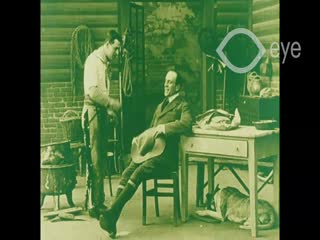
A social drama about a friendship that is put under pressure by class differences.
Short reportage about the striking of coins in France.
Newsreel item in which mister Poultney Bigelow after his visit to Huis Doorn reads a statement about emperor Wilhelm II' s opinion about F.D. Roosefelt.
Crime film about a female thief who tries to mend her ways.
Short comedy in which Susie convinces her husband Maurice to find a job in a country far away, because family friend Anatole is harassing her. Eventually it turns out that it is Anatole who gets the h...
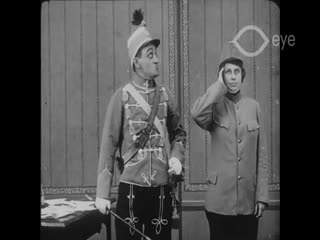
Mister Pijp is called up for a renewed service. Comical and romantic intrigues follow when his fianceé goes with him in disguise.
A reportage about a visit to the former German Emperor Wilhelm II (1859-1941) in Huis Doorn.
The battle of Zborov: A soldier gives to smell a rotten can to his sleeping friend.
The battle of Zborov: Several soldiers in the trench with stuffy noses. One of them holds a rotten can.
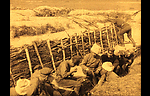
The battle of Zborov: Several soldiers sit in the trench.
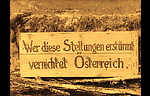
The batttle of Zborov: A board with the slogan in Austrian trenches - "Wer diese Stellungen erstürmt vernichtet Österreich."/ "A conqueror of this position will defeat Austria".
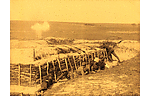
The battle of Zborov: Several soldiers hidden in the trench.
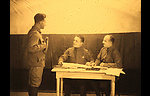
An office with two sitting Russian generals (on the left Rudolf Medek - author of the synopsis). Tomeš registers himself as a volunteer.
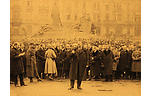
A documentary part: First days of the independent Czechoslovak Republic - František Udržal speaks to the gathering of people in front of the monument of Jan Hus.
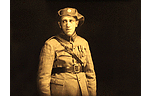
Bárta (laborer) in the uniform of Czechoslovak volunteer from France.
O. Verf.. „Kino und Kirche.“ Bild & Film. Zeitschrift für Lichtbilderei und Kinematographie III, 3/4 (1913/1914): 73-74. Beschlüsse der Fuldaer Bischofskonferenz von 20.8.1913. Schulpflichtigen ...
Felix, F.. „Die Kinematographie der Töne.“ Bild & Film. Zeitschrift für Lichtbilderei und Kinematographie III, 3/4 (1913/1914): 78-79. Meldung über erste Versuche, Film-und Tonaufnahmen zu sync...
W.R.. „Historische Filme.“ Bild & Film. Zeitschrift für Lichtbilderei und Kinematographie III, 3/4 (1913/1914): 86. Der Rezensent führt den Film als Beispiel dafür an, dass die Filmindustrie mi...
Hellwig, Albert. „Die Plakatzensur in Preussen.“ Bild & Film. Zeitschrift für Lichtbilderei und Kinematographie III,5 (1913/1914): 104-106. Rekapitulierung der Rechtslage zu Filmplakaten.
O. Verf.. „Preußischer Ministerialerlaß über das Plakat- und Reklamewesen.“ Bild & Film. Zeitschrift für Lichtbilderei und Kinematographie III, 5 (1913/1914): 111-112. Filmplakate bedürfen de...
Warstat, W.. „Kino und Schule. Von Prof. Dr. A. Sellmann.“ Bild & Film. Zeitschrift für Lichtbilderei und Kinematographie III,5 (1913/1914): 116-117. Der Rezensent sieht die Verwendung von Filmen...
Fritze, G.A.. „Die Kinematographie im Dienste der Industrie.“ Bild & Film. Zeitschrift für Lichtbilderei und Kinematographie III,6 (1913/1914): 124-128. Erörterung der bereits erfolgten Verwendu...
Felix, F.. "Rektor Lemkes „Reichsausschuß“." Bild & Film. Zeitschrift für Lichtbilderei und Kinematographie III, 6 (1913/1914): 134-137. Bericht über einen Reichsausschuss für wissenschaftlich...