Reportage about Austrian war ships and submarines. Images of life on board of the ship 'Tegetthof', navigation (with log and sextant), signals with flags, a torpedo boat flottilla at full speed and t...
A social drama about a friendship that is put under pressure by class differences.
Short reportage about the striking of coins in France.
Newsreel item in which mister Poultney Bigelow after his visit to Huis Doorn reads a statement about emperor Wilhelm II' s opinion about F.D. Roosefelt.
Crime film about a female thief who tries to mend her ways.
Short comedy in which Susie convinces her husband Maurice to find a job in a country far away, because family friend Anatole is harassing her. Eventually it turns out that it is Anatole who gets the h...
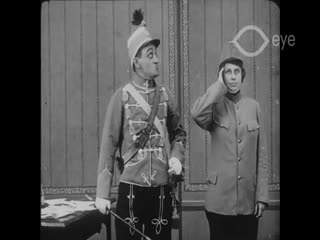
Mister Pijp is called up for a renewed service. Comical and romantic intrigues follow when his fianceé goes with him in disguise.
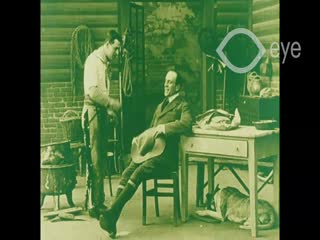
A reportage about a visit to the former German Emperor Wilhelm II (1859-1941) in Huis Doorn.
Three Russian soldiers sit on the bench and sing.
Tomáš Garrigue Masaryk - the 1st President of Czechoslovak Republic - contemplates.
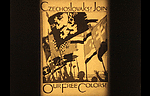
An illustrative part: Poster with the slogan: "Czechoslovaks! Join our free Colors!" and flags with provincial emblems.
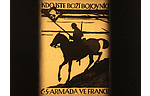
An illustrative part: Poster with the slogan: "The God´s fighters - Czechoslovak army in France" and soldier on horseback with Hussite flag.
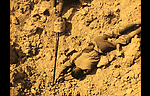
The battle of Zborov: Dead soldier and rifle with bayonet stuck in the ground.
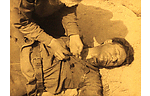
Wounded Tomeš.
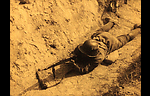
Austrian soldier with a rifle lying in the trench. A hand-grenade is in front of him.
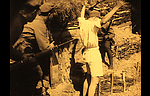
An Austrian soldier in underwear, three Russian soldiers around him.
R. Genenchen, Kriegsunterstützung und Kinobesuch, Der Kinematograph, 506, (1916), S. 17. Bericht darüber, dass die Gemeinde Weida/Sachsen Soldatenfrauen, die Kinos besuchen, die städtische Unterst...
Colonia-Film-GmbH, Die Leute wollen mal wieder lachen !, Der Kinematograph, 508, (1916), S. 43.
Staat und Kino, Der Kinematograph, 514, (1916), S. 11-12. Erörterung der Idee, der Staat könne die Filmproduktion in seine Hände nehmen. Als Beispiel wird die Eisenbahn genommen, die auch zunächst...
P. Max Grempe, Deutsche und feindliche Kinopolitik im Weltkriege, Der Kinematograph, 515, (1916), S. 17-19. Erötertung der verkehrten Politik Deutschlands in Bezug auf das Kino. Die hohen Lustbarkeit...
Walter Thielemann, Der Vaterländische Hilfsdienst und die Kinobranche, Der Kinematograph, 521/2 , (1916). Befürchtung, der Vaterländische Hilfsdienst könne die Kinobranche schwächen. Diese sei ab...
"'Um das grosse Erbe'. Aufhebung eines Filmverbots", Der Kinematograph, 549, (1917), S. 11-14.
Neuheiten auf dem Berliner Filmmarkte, Der Kinematograph, 550, (1917), S. 15-17. Rezension aktueller Filme. Interessant ist, dass die russische Gesellschaft filmisch thematisiert wird. Karl Schneider,...
Saturn Film AG, Rasputin. Drama in 5 Akten, Der Kinematograph, 553, (1917), S. 24.