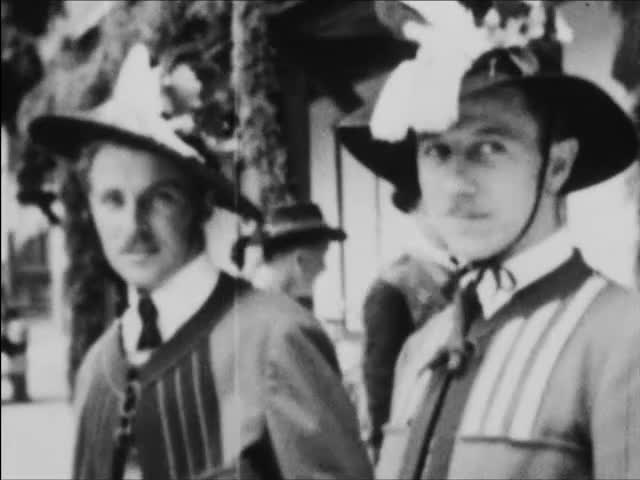
An entry for the 1938 Scottish Amateur Film Festival, the film shot in Austria, includes scenes of local festivals. [Violet Anderson was a contemporary of Norman McLaren at Glasgow School of Art].
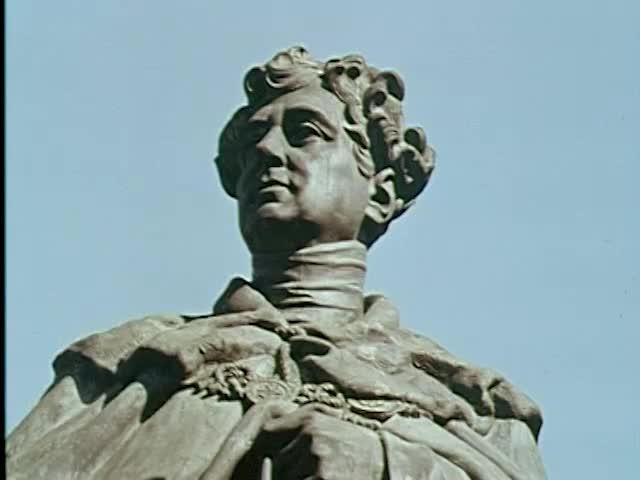
A reconstruction of George IV's visit to Edinburgh in 1822 drawing a contrast between the old town and the New Town which the King was able to see in development. (15 mins)
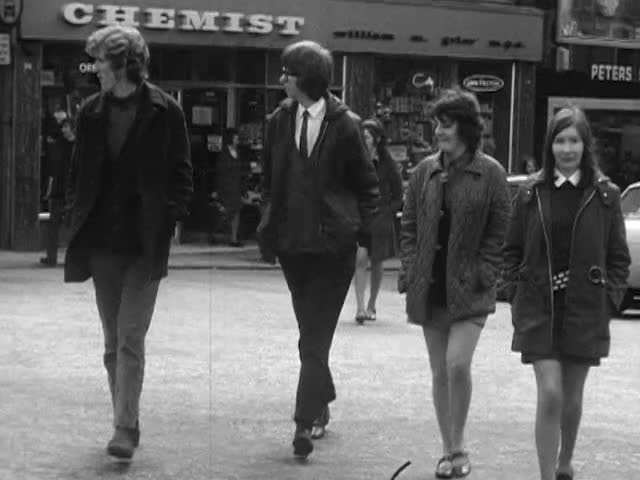
One of a series of films made about life in Dumfries Academy 1955-1978, this film was shot by pupils in the academic year 1969-1970, and includes several "in-jokes".
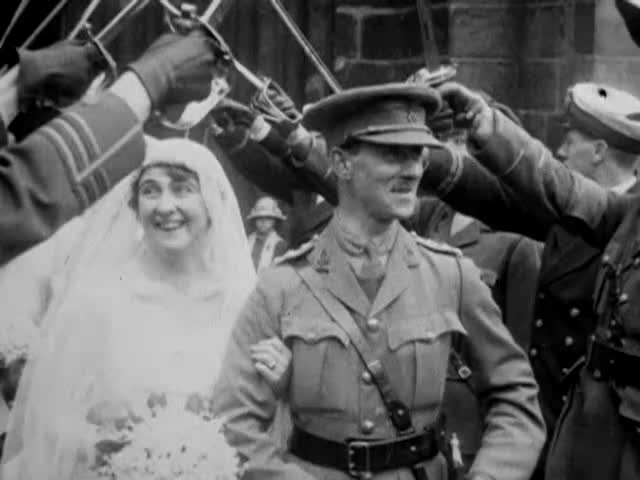
The First World War was still raging when the wedding of Captain John Glaister RAMC, son of Prof John Glaister and Isobel Lindsay, daughter of Sir John Lindsay took place at Glasgow Cathedral, 25th Ma...
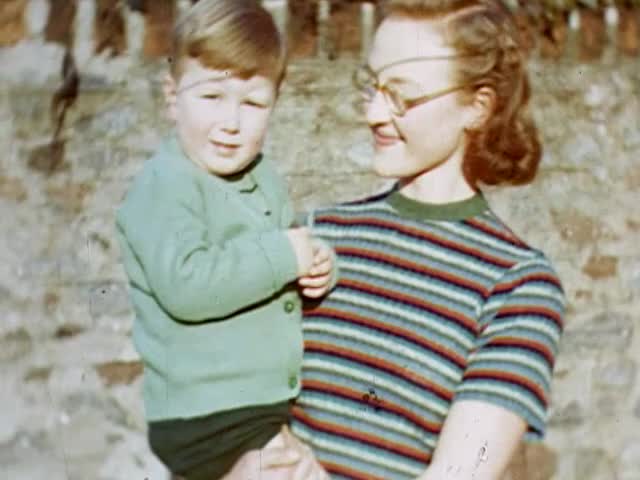
Family film featuring harbour views of Stonehaven and Collieston. The film features shots of men in soldier's uniform - possibly this film was taken during their leave from duties in the Second World...
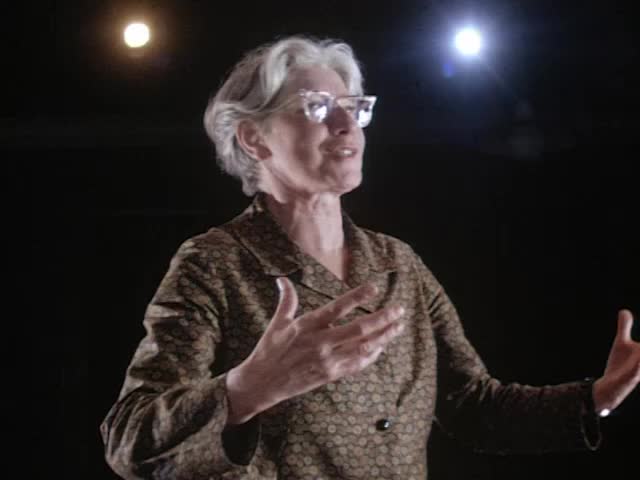
The operation, personal, and educational value of the Children's Theatre, Aberdeen. This was shot at the time of the retirement of Miss Catherine Hollingworth after 25 yrs service to the Children's Sp...
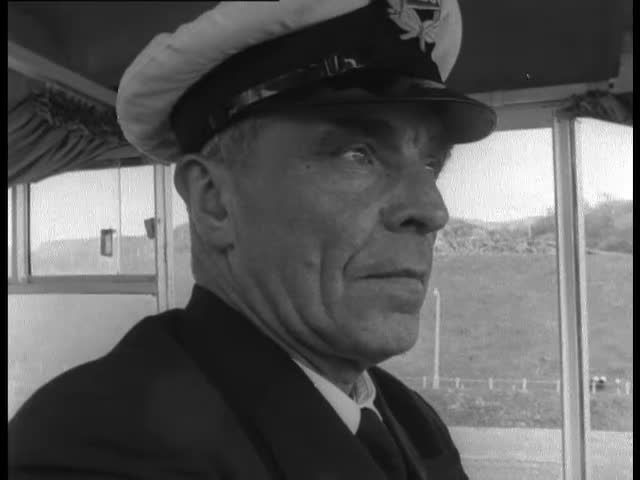
The Denny D2 hoverbus was the first in the world produced for commercial operation. Showing the hovercraft moving over the Firth of Clyde. Includes interior shots of control room, and operation of th...
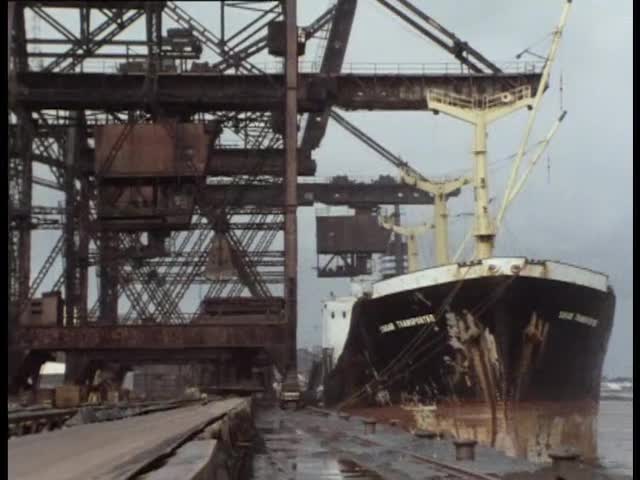
The process of transferring iron ore from ships docked at General Terminus Quay on the Clyde, and at Hunterston, on the Firth of Clyde. The ore was destined for use in steelworks and shipbuilding yar...
"Morgen, Findus, wird"s was geben" (2005/06)
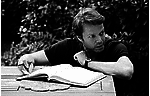
Sandra Nettelbeck while shooting "Was uns nicht umbringt" (2018)
"Schilf - Alles, was denkbar ist, existiert" (2011/12)
Hans-Christian Schmid on the set of "Was bleibt" (2012)
Holger Haase on the set of "Da geht noch was" (2012/13)
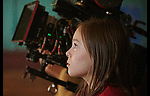
Ava Petsch while shooting "Was man von hier aus sehen kann" (2022)
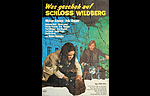
German movie poster of "Sie nannten ihn Krambambuli" ("Was geschah auf Schloss Wildberg", 1971/72)
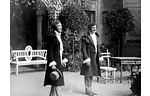
a part of the feast was also a theatre performance
The Danish film journal FILMEN was published in the period 1912-1919 (24 issues per year). First published under the name "A/S Kinografen", then from 1913 under the name "Association of Cinema Theatre...
6 scenes had to be removed, which refer to the contracts of Versailles (after World War I), when Germany lost several parts of its territory. After the cuts the film was permitted to young people unde...
One scene had to be cut out: Vivian lying on the chaise longue welcoming the young Cox (titles number 101-113). After this shortage the film was permitted to young people under 16 years.
Film distributing company applies for new censoring of the film "Stíny londýnských nocí". The film was qualified for public screening - ban for young people, exclusion of scenes and dialogues.
The provincial governments of Baden and Prussia applied for revocation of permissionof the film "Das gottlose Mädchen" at the censorship headquarter in Berlin. The application was rejected but the ce...
The production company "Alhambra Film G.m.b.H., Berlin" applied against the ban of the film "Doppelehe (Der Bigamieskandal eines Millionärs)" at the censorship headquarter in Berlin. The application ...