Unedited footage. At the Chrystal Palace, in Oporto, an automobiles exhibition. Panoramic view of the city. The car stands.
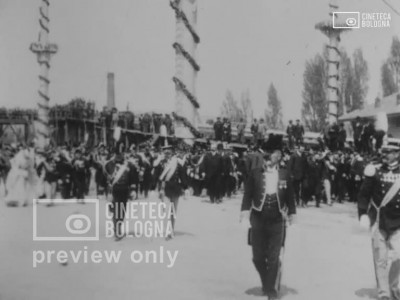
Panoramic shot over Santiago de Compostela. A crowd in the streets attends a procession followed by a parade of men with hats, women with veils, people with masks and music bands.
Unedited footage on the Presidential visit to Oporto on the occasion of the 31st January celebrations (1st attempt of a republican revolution)
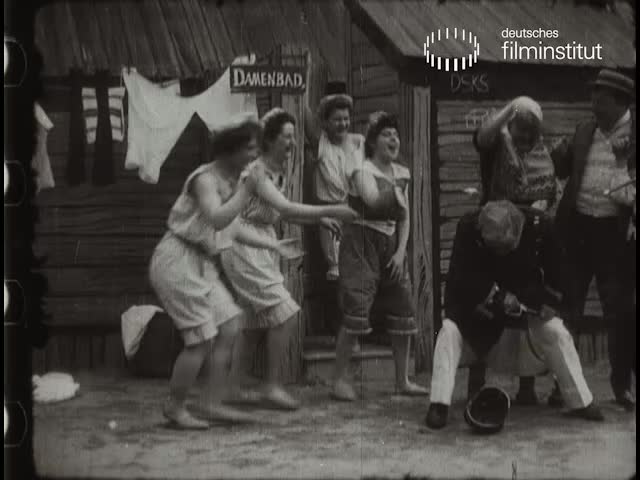
Bei "Vor dem Damenbad" handelt es sich um ein Tonbild. Tonbild ist eine Bezeichnung für frühe Kinofilme mit Synchronton (aufgezeichnet und abgespielt im Nadeltonverfahren). In Deutschland begann die...
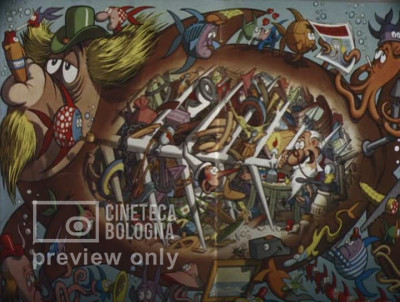
A re-examination of the text based on illustrations of various editions of “Pinocchio” by Carlo Collodi.
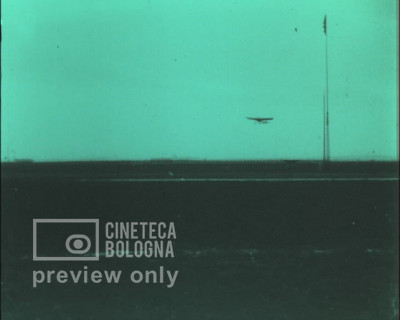
Episode of the series "Aviation in Brescia": airplane exercises featuring the pilots Curtiss, Rougier, Calderara, Blériot and Cobianchi.
Film restored in collaboration with Fondazione Cineteca Italiana.
This documentary puts together different moments of Pier Antonio Quarantotto Gambini’s poetic journey, pausing on the only work in verse by this writer from Trieste, “Racconto d'amore” (Lo...
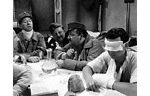
Medium shot of several men sitting around a table with a half loaf of bread and a carafe of water. On the left sits Sakař (actor: Jindřich Plachta) with a bandaged neck. To the right sit Vyskočil (...
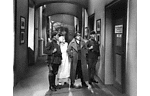
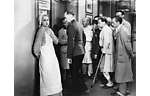
Wide shot of a corridor. Standing in front of the door to Dr. Šrámek's office are Nurse Mathilde (actress: Adina Mandlová) and Rjepkin (actor: Vladimír Borský) flanked by Austrian military guards...
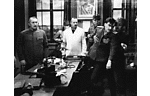
View of an office. A colonel of the Austrian army (actor: Jaroslav Marvan) and Dr. Šrámek (actor: František Smolík) are standing at a desk. Behind Šrámek are two military guards (on the right, a...
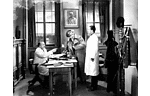
Wide shot of an office. Dr. Šrámek (actor: František Smolík) is sitting at a desk and pointing at another doctor standing on the opposite side of the desk. Rjepkin (actor: Vladimír Borský) is st...
Wide shot of a corridor and a door with a sign indicating "MUDr. Fr. Šrámek." Standing in front of the door are nurse Mathilde (actress: Adina Mandlová), First Lieutenant Liška (actor: František ...
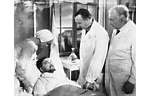
Lieutenant Rjepkin (actor: Vladimír Borský) is lying on a hospital bed in the foreground. Three figures are standing over him: Nurse Mathilde (actor: Adina Mandlová) on the left, and doctors Šrám...
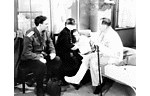
View of a hospital room. In the centre of the image, cadet Severa (actor: Stanislav Strnad) is lying on a bed and hugging his mother (actress: Marie Ptáková), who is sitting next to him. Rjepkin is ...
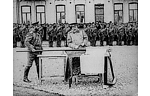
Hammering nails into flagpole of Czech legion and ceremonial blessing of the flag (28th September 1914) in Kiev.
O. Verf.. „Krieg und Kino.“ Der Kinematograph 397 (1914): 3-4. Bericht, wie bislang der Film in Kriegen eingesetzt worden sei. Ratschläge an Kinobesitzer, wie sie sich zu verhalten hätten. Mutma...
O. Verf.. „Mars regiert die Stunde.“ Der Kinematograph 397 (1914): 5-8. Aufruf an die Kinoindustrie, sich angesichts des Krieges in die Dienste des Vaterlandes zu stellen. Vorschlag, möglichst ak...
Mit der Kamera in der Schlachtfront.“ Der Kinematograph 397 (1914): 7. Werbeanzeige, die die Bedeutung der Filmaufnahmen gerade angesichts des drohenden Krieges hervorhebt.
Aubinger, Josef: „Die Kinematographie in Kriegszeiten.“ Der Kinematograph 398 (1914): 3-5. Artikel, der die mögliche Zukunft des Kinowesens im Krieg beschreibt. Die wirtschaftliche Lage der Kinos...
O. Verf.. „Schliesst die Kinos nicht.“ Der Kinematograph 399 (1914): 3-4. Aufruf an die Kinoindustrie, die Kinos nicht zu schließen, da das Volk in Kriegszeiten Ablenkung brauche. Die Eintrittspr...
Monopolfilm-Vertriebs-GmbH..“Patriotisches Kriegs-Programm.“ Der Kinematograph 399 (1914): 5. Werbung für das aktuelle Filmprogramm der Monopolfilm GmbH.
Asta-Nielsen-Lichtspiele GmbH. „Bismarck. Die neuesten Aufnahmen aus den Kriegstagen.“ Der Kinematograph 400 (1914): 1. Werbung, mit dem Hinweis, dass der Stoff des Filmes den ernsten Kriegstagen ...
O. Verf.. „Der Mangel an Aktualitäten.“ Der Kinematograph 400 (1914): 3-4. Artikel, der den Mangel an aktuellen Aufnahmen aus dem Krieg beklagt. Der Krieg sei die richtige Gelegenheit für die Pr...