Film restored in collaboration with Nederlands Filmmuseum.
A partire dalle "Lettere dal carcere", il documentario traccia una ricostruzione della figura di Antonio Gramsci. Si inizia in un'aula universitaria, dove un professore dà avvio a una lezione s...
The life of the philosopher Antonio Rosmini in the historical, political and cultural dimensions of the Risorgimento.
01 – Nel mondo (Mosca, 4/06/1970) Panorama della città di Mosca vista dal fiume Moskova. Alcuni cittadini sovietici ascoltano le notizie dall'autoradio o leggono quotidiani dove è riportata ...
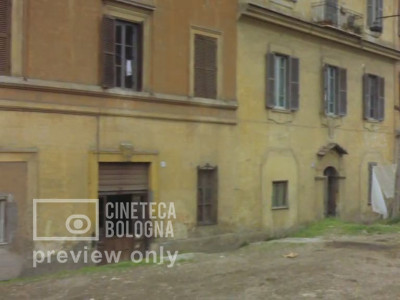
Just outside the old city walls of Rome, we find a mass of washed-out houses and bumpy streets arranged in a geometrical pattern that makes them anonymous and depersonalized. The documentary fil...
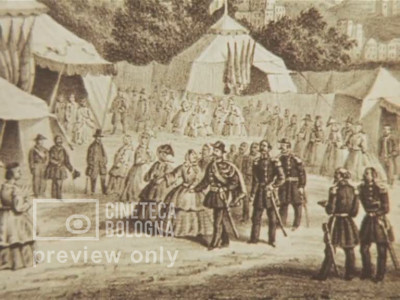
The historical events connected to Garibaldi and the Expedition of the Thousand.
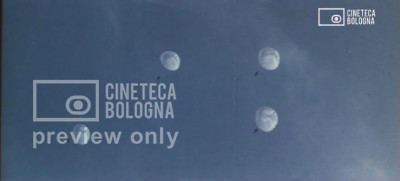
Alpine paratrooper training.
At the end of the Second World War politicians including Alcide De Gasperi, Jean Monnet, Paul Henri Spaak, Robert Schumann, Konrad Adenauer fought a tough battle for European unity. The end of c...
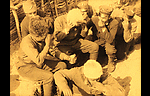
The battle of Zborov: A soldier gives to smell a rotten can to his sleeping friend.
The battle of Zborov: Several soldiers in the trench with stuffy noses. One of them holds a rotten can.
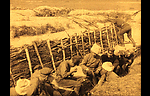
The battle of Zborov: Several soldiers sit in the trench.
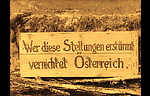
The batttle of Zborov: A board with the slogan in Austrian trenches - "Wer diese Stellungen erstürmt vernichtet Österreich."/ "A conqueror of this position will defeat Austria".
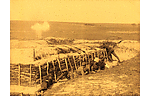
The battle of Zborov: Several soldiers hidden in the trench.
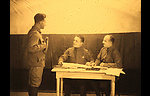
An office with two sitting Russian generals (on the left Rudolf Medek - author of the synopsis). Tomeš registers himself as a volunteer.
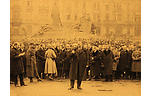
A documentary part: First days of the independent Czechoslovak Republic - František Udržal speaks to the gathering of people in front of the monument of Jan Hus.
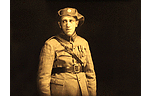
Bárta (laborer) in the uniform of Czechoslovak volunteer from France.
Oscar Geller, Detektiv-Filme, Der Kinematograph, 593, (1918), S. 21-25. Eröterung der Krimiwelle. Man könne Krimis nicht einfach als Schund abtun. Auch wenn viele der frühen Krimis, maßgeblich aus...
Poldi Schmidl, Der Kinobesitzer als Staatsbeamter, Der Kinematograph, 607, (1918). Angesichts der geplanten Konzessionspflicht für Kinobesitzer wird die Möglichkeit einer Verstaatlichung der Filmind...
Argus, Neuheiten auf dem Berliner Filmmarkte, Der Kinematograph, 614, (1918). "Kinder der Liebe" als Tendenz- und Aufklärungsfilm bezeichnet, dessen Absicht überzeuge. "Der Gefangene von Dahomey" se...
Egon Jacobsohn, Ferdinand Lassalle, Der Kinematograph, 615, (1918), S. 18-30. Bericht von der Uraufführung in Berlin. Die Aufführung sei ein voller Erfolg gewesen, zumal es besonders gut in die Zeit...
Deutsche Lichtbild Gesellschaft e.V., Der Friedensreiter, Der Kinematograph, 618, (1918), S.22-23.
Emil Perlmann, Wenn die Waffen ruhen...!, Der Kinematograph, 619, (1918). Erörterung der Lage der Filmindustrie angesichts des greifbaren Kriegsendes. Die Filmindustrie müsse den Kampf gegen die Zen...
Der deutsche Film für das Ausland, Der Kinematograph, 620, (1918). Es sei Aufgabe der deutschen Filmindustrie, den negativen Vorstellungen über Deutschland, die im Ausland im Krieg verbreitet worden...
Universum Filmverleih, Die Waffen nieder, Der Kinematograph, 620, (1918), S. 28-33.