Item probably from a Topical Budget newsreel showing a march past of British troops, possibly in London.
Two items from this issue: "The Atlantic Flight - Miss Catherine Masson christens the waterplane "America" which is to attempt the great flight across the Atlantic." "Great Britain Prepares - Scenes ...
British and Belgian troops on dockside at Ostend. "Trekking To Safety - British and Belgian troops watch the departure of the refugees from Ostend" - one shot only after this title.
"The Retreat From Ghent - Belgian cavalry and artillery falling back on Bruges".
"King And President - The King of the Belgians and President Poincaré leaving Furnes after an inspection of the French Cavalry in the market square".
"The New Army Difficulties - Soldiers making their way to their billets through the flooded district".
"War In The Snow" - Severe snow storms add to the discomfort of German troops who are compelled to leave their dug-outs to prevent being frozen to death.
"In The Vosges - The ruins of La Bourgonce where the German troops suffered heavy losses".
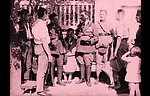
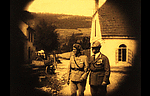
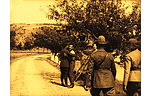
Reunion of families after war. In the middle stand Tomeš, Janda and Bárta in uniforms of volunteers. Women sit behind and sons talk with fathers.
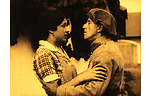
Volunteer Bárta (laborer) encounters his wife.
Volunteer Janda (smith) in Italian uniform encounters his family after the end of the war.
Janda´s son in the apron and volunteer Janda in Italian uniform.
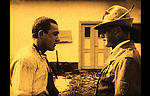
From the left: Volunteer Bárta in French uniform, volunteer Janda in Italian uniform.
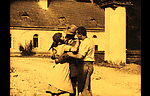
Tomeš encounters his wife and son after the return from the war. Tomeš hugs his son. His wife stands nearby and smiles at Janda and Bárta.
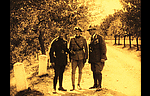
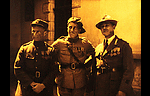
From the left: Tomeš (Russian uniform), Bárta (French uniform) and Janda (Italian uniform). Volunteers rest during their coming home.
From the left: Tomeš (Russian uniform), Bárta (French uniform) and Janda (Italian uniform).
Josef Max Jacobi, Der Triumph des Films, Der Kinematograph, 563, (1917), S. 13-14. Die Macht des Films sei lange verkannt worden, im Krieg aber hätte sie sich bewiesen. Kinobesitzer sollten mit gutem...
Kriegsanleihe-Filme, Der Kinematograph, 563, (1917), S. 22. Ankündigung neuer Trickfilme zur Werbung für die Kriegsanleihe. Sie werden allesamt als sehr unterhaltsam und technisch gelungen beschrieb...
Mercedes-Film GmbH, Die Leibhusaren und ihre Geschichte, Der Kinematograph, 565, (1917). Die Werbung verweist darauf, dass der Film durch von Mackensens Frau gefördert wird.
Deutsche Lichtbild Gesellschaft e.V., Die Arbeit unserer Heimarmee, Der Kinematograph, 566, (1917), S. 11.
Argus, Neuheiten auf dem Berliner Filmmarkte, Der Kinematograph, 566, (1917), S. 21-22. Rezensionen zu "Aus des Deutschen Reiches Waffenschmiede", "Höhenluft mit Henny Porten" und "Der schwarze Chauf...
Julius Urgiss, Oesel genommen, Der Kinematograph, 566, (1917), S. 22-24. Rezension der Aufnahmen des Königlichen Bild- und Filmamtes von der Eroberung der Insel Ösel (Estland, zum russ. Reich gehör...
Mercedes-Film GmbH, Suchomlinow, Der Kinematograph, 566, (1917), S. 27.
Propaganda-Filme, Der Kinematograph, 571, (1917), S. 19-20. Deutsche Propagandafilme seien noch immer den feindlichen unterlegen. Man müsse zu denselben Waffen greifen, wie es die Feinde tun und die ...